
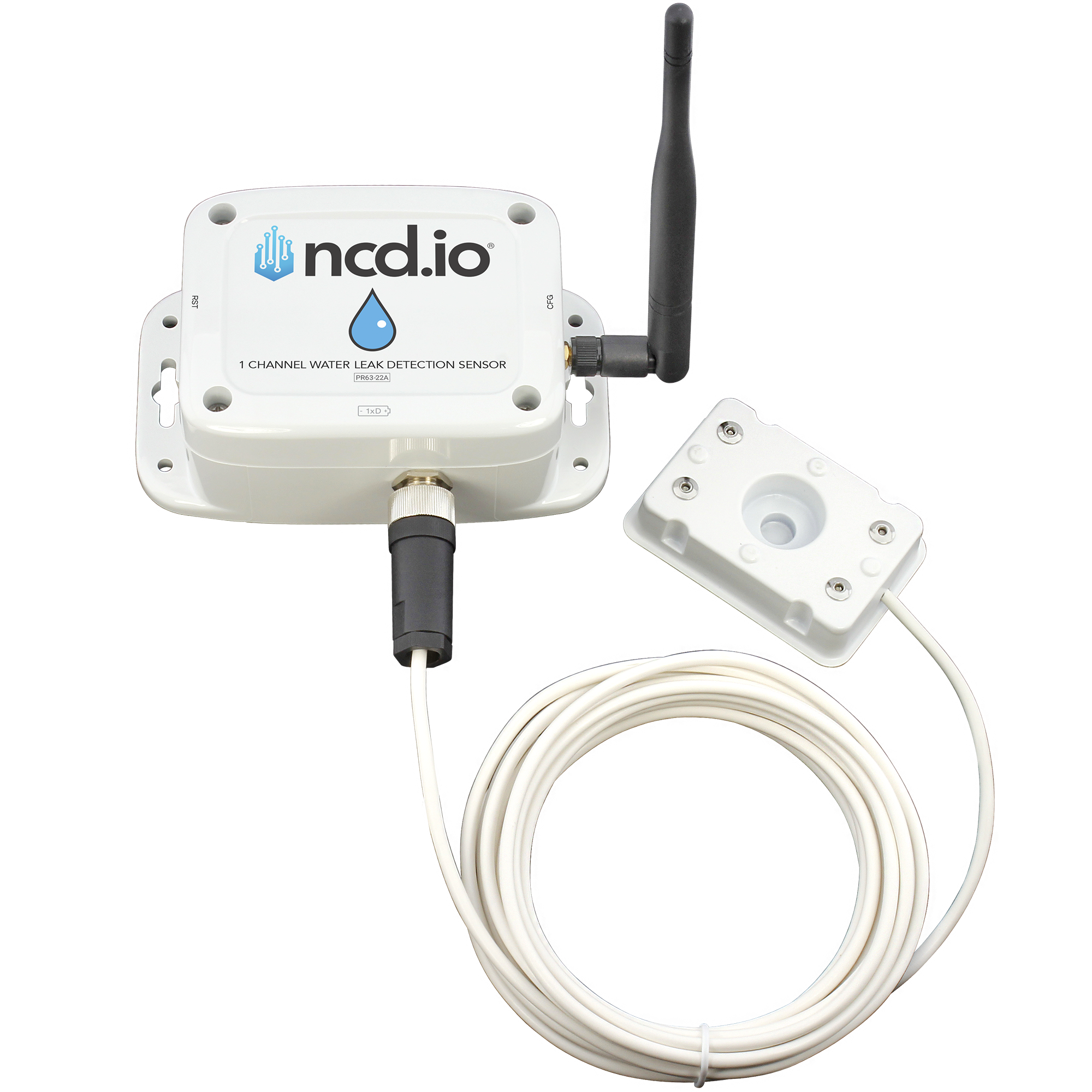
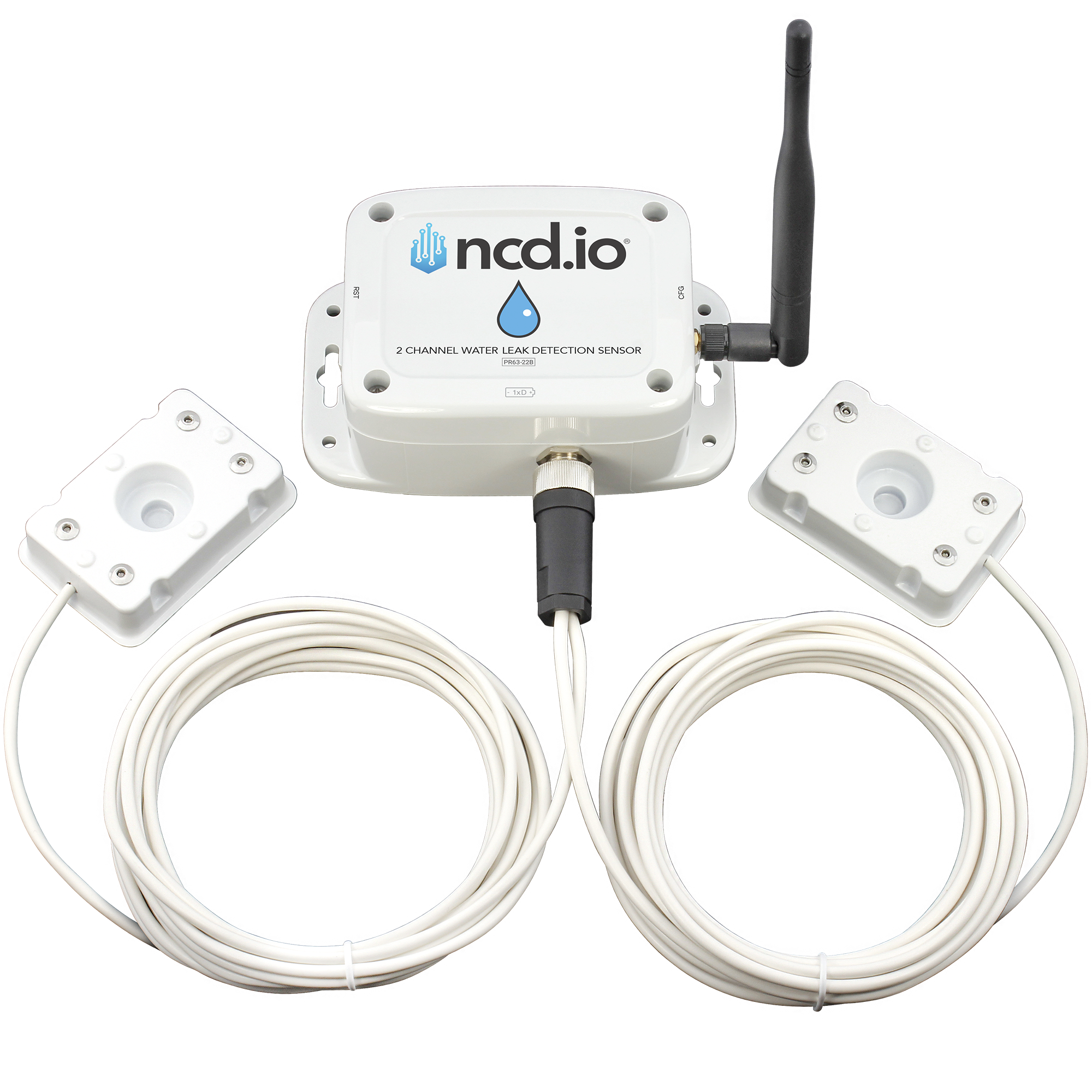
 Made in the USA
The puck is a spot detector — it guards the one low point where water always ends up: a drip pan, a floor drain, the base of a tank, the dip in a server-room floor. Set it flat on that spot, power on, and it sends a wet/dry alert the moment water reaches it — not at the next walk-through. These are the exact single points where leaks show up first.
 Server Rooms & Data Closets
Chilled-water and CRAC/CRAH cooling loops run inches from live racks. A drip under a raised floor reaches powered equipment fast.
 Under Water Heaters & Boilers
Tanks, fittings, and relief valves fail slowly and then all at once — usually overnight, when no one is on site to catch it.
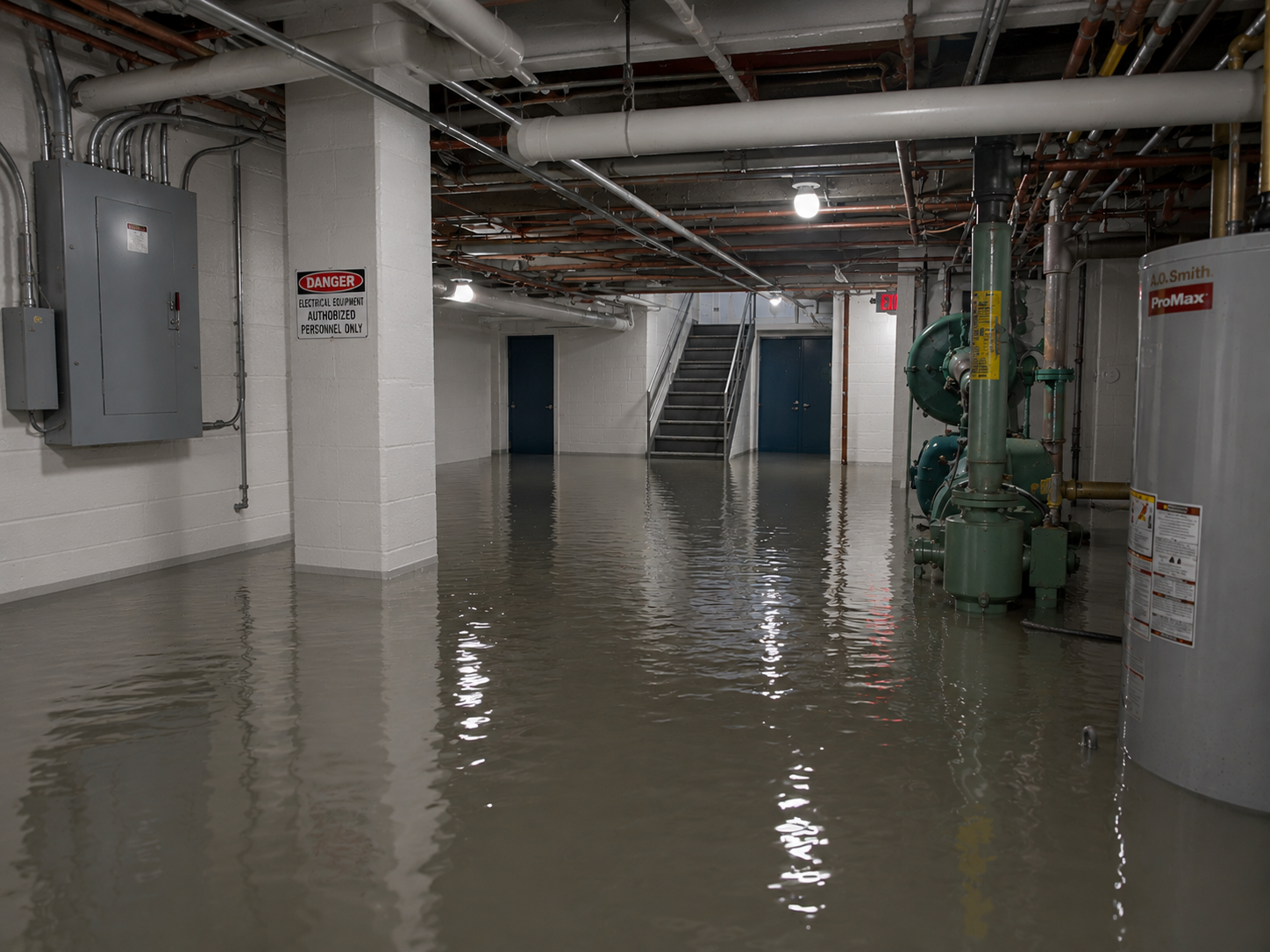 Sump Pits & Basements
A stuck float or an overwhelmed pump turns a storm into standing water against everything stored down low.
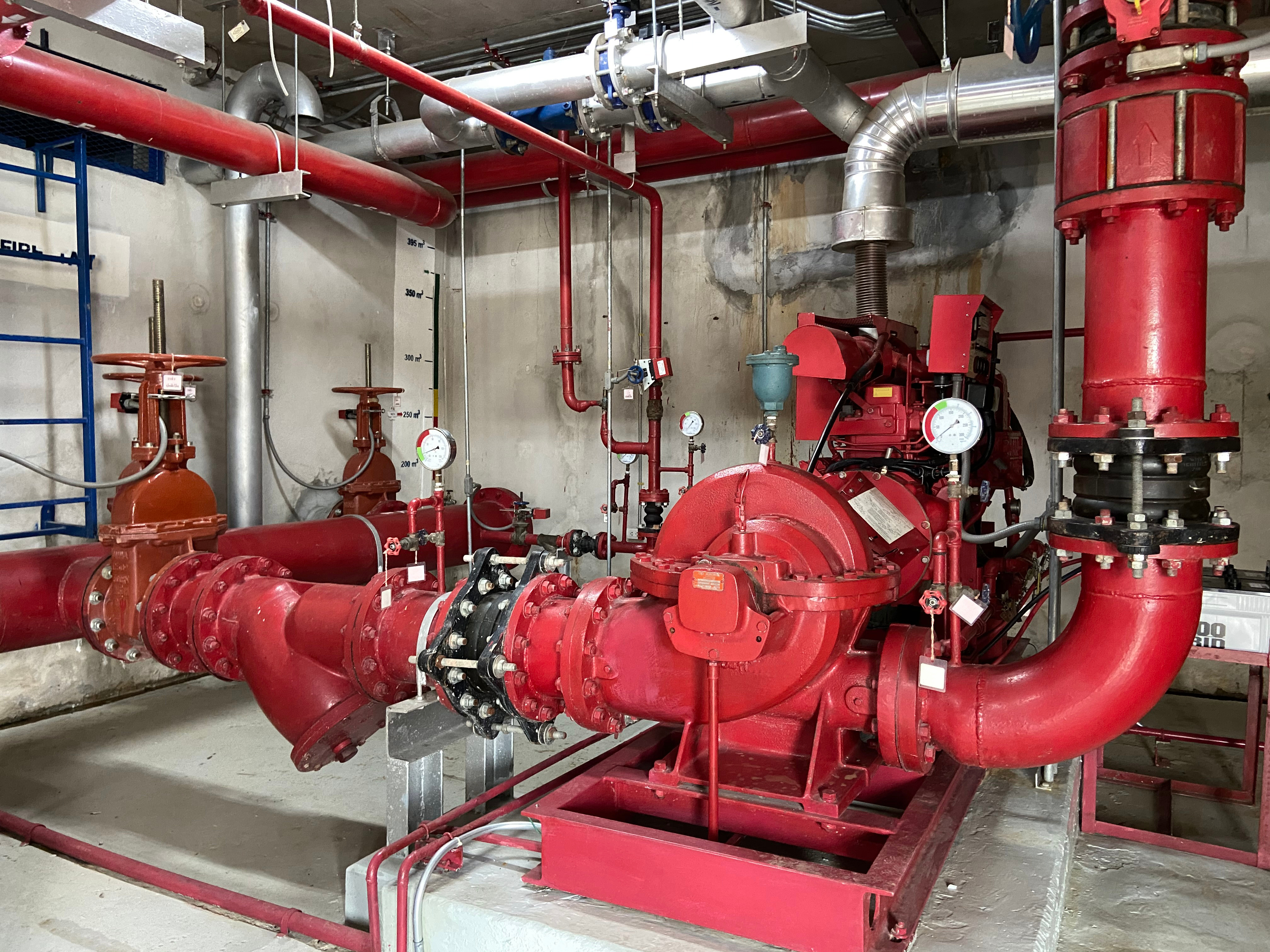 Pump Rooms & Process Lines
Pump seals, unions, and valves weep long before they burst. The wet spot on the floor is the early warning you can act on.
 Drains & Condensate Pans
A blocked floor drain or an overflowing condensate pan backs up quietly until it finds the rest of the room.
 Storage & Warehouse Floors
Roof leaks and floor spills find inventory first — and you usually find out at the next stock count, not before.
Place the sensor, power on, and get alerted the moment water shows up.
Position the puck at the low point where water collects — beside a drip pan, a drain, or on the floor. The moment it senses water, it transmits.
Mount the enclosure near the area you’re protecting. Run on the D-cell with Supercap (included), or add the external-power option for permanent installations.
The sensor joins a self-forming network, up to 2-mile line-of-sight range with the on-board antenna.
Browser dashboards, threshold email alerts, and CSV export through the Atrium gateway. Catch a leak the moment it starts.
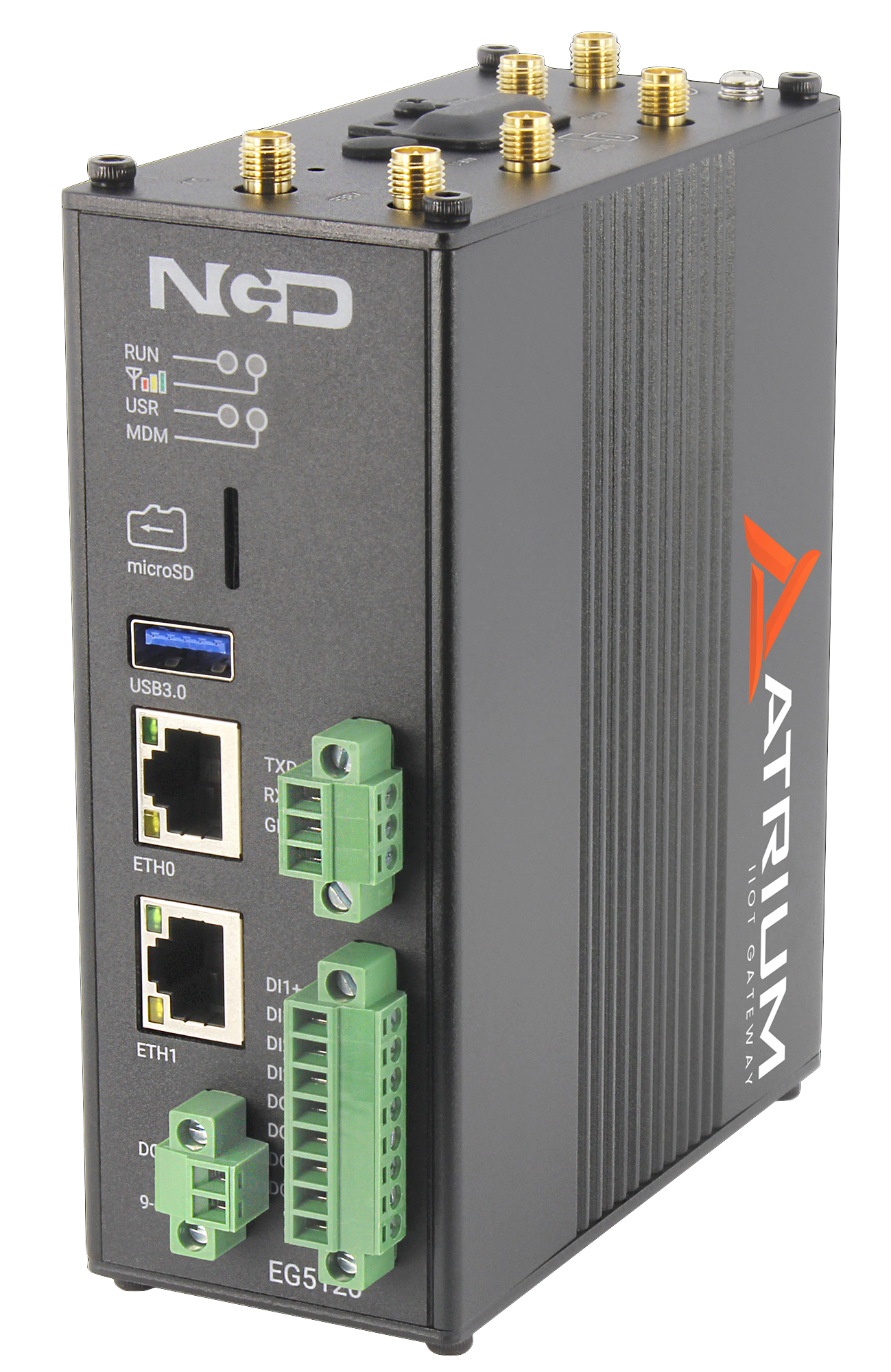
The Atrium Gateway isn’t just a data receiver. It’s a complete industrial IoT platform with dashboards, alerts, reporting, and built-in apps. Point your water detect sensors at it, open your browser, and go.
Drag-and-drop widgets let you build custom leak-monitoring views for any audience, facilities teams, IT, or maintenance managers. Every dashboard auto-refreshes and supports fullscreen mode for wall-mounted displays.
In Atrium, Triggers are threshold conditions on a single sensor metric, they fire when a value crosses the line. Actions link one or more triggers to responses like email or relay control, and run when every trigger is met. You build both in the browser, no code required.
| Name | Sensor | Cond. | Thresh. | Current | Status |
|---|---|---|---|---|---|
| Basement Leak | Basement | Above | 0.90 | 0.00 | OK |
| Server Room Leak | Server Room | Above | 0.90 | 1.00 | TRIGGERED |
| Drain Backup | Mech Room Drain | Above | 0.90 | 0.00 | OK |
| Low Battery | Basement | Below | 20 % | 72 % | OK |
| Name | Triggers | Action | Status |
|---|---|---|---|
| Server Room Leak Alert | Server Room Leak (Server Room) MET | Email (trigger+clear) maintenance@acmemfg.com | ACTIVE |
| Basement Leak Alert | Basement Leak (Basement) | Email (on trigger) facilities@site.com | OK |
| Low Battery Notice | Low Battery (Basement) | Email (trigger+clear) it-ops@site.com | OK |
Schedule recurring reports delivered straight to stakeholders’ inboxes, leak alert digests, fleet summaries, and per-zone group roll-ups, all generated automatically and emailed on the cadence you choose.
| Name | Type | Format | Schedule | Last Sent | Enabled |
|---|---|---|---|---|---|
| Leak Alert Digest | Alert Digest | CSV | Daily at 7:00 AM | 06/26/2026 | ON |
| Weekly Fleet Summary | Fleet Summary | Monday at 8:00 AM | 06/22/2026 | ON | |
| Basement Zone Group | Sensor Group | PDF+CSV | Friday at 6:00 AM | 06/26/2026 | ON |
| Leak Event Export | Custom SQL Query | CSV | Monday at 8:00 AM | 06/22/2026 | ON |
| Server Room Status | Sensor Group | Daily at 6:00 AM | 06/26/2026 | ON |
The App Center runs on the gateway itself, an app store on your own hardware with no cloud account and nothing to sign into somewhere else. Browse the catalog in your browser, install what the job needs in seconds, and update it in place. Your gateway starts as a lean core and grows only where your operation actually needs it.
Atrium works as a fully self-contained system, but when you need to integrate, Node-RED is built in and ready. Push data to cloud platforms, databases, SCADA systems, or custom APIs, all configured through a visual flow editor.
Industrial water leak detection built to run unattended for years.
Most leak sensors only tell you water showed up. This one transmits the instant it goes dry to wet and again when it dries out — so you also know when a spill is cleared and the channel is ready to catch the next one.
The moment water reaches the puck, the sensor picks it up. It works by sensing the water’s conductance, so it reliably catches the water found in real facilities: tap, ground and rain water, process water, condensate, and wash-down.
The detection puck rides on a 4.5-meter lead down to the floor, so the transmitter stays mounted clear and dry while the puck does the sensing. Add a second channel to watch two spots from one device.
Up to 5 years of battery life from a D-cell with Supercap (included). The sensor reports on a user-preset interval and immediately whenever the wet/dry state changes.
The rugged enclosure stands up to dust and the damp environments where leaks tend to happen, so the transmitter keeps working in the spots that punish electronics.
Update firmware over the air (OTA / FOTA) across your fleet. No climbing into crawl spaces, no removing sensors from service.
Same job, a very different approach. Here’s where this sensor pulls ahead of the wireless leak detectors most teams have seen.
| Channels | One or two independent detection channels (your choice) |
| Detection | Water presence or non-presence (wet or dry condition) |
| Sensing Element | Water detection puck — point detection at a single spot |
| Sensing Options | Puck on a 4.5 meter connecting lead |
| Two-Way Alerts | Transmits when a dry sensor becomes wet, and again when a wet sensor becomes dry |
| Transmission Trigger | User-preset periodic interval, plus immediate on a change of input state |
| Protocol | Long-range wireless mesh |
| Frequency Bands | 868 MHz / 900 MHz / 2.4 GHz |
| Band class | Sub-GHz (868 / 900 MHz) — sub-gigahertz radio travels farther and penetrates walls and equipment far better than higher-frequency Wi-Fi or Bluetooth |
| Range (line of sight) | Up to 2 miles (on-board antenna) |
| Integration | Open communication protocol (no proprietary lock-in), AWS, Azure, MQTT, Node-RED, or any modern interface |
| Battery | D-cell with Supercap |
| Battery Life | Up to 5 years (interval & environment dependent) |
| Firmware | Over-the-air (OTA / FOTA) updates across the mesh |
| Power Options | Battery only, or external power connector + battery |
| Mounting | Wall-mount or magnet-mount |
| Enclosure | IP65 (main enclosure only) |
| Environment | Ideal for indoor and outdoor applications |
| Sensing element | Water detection puck (point detection) |
| Detection points | One or two channels |
| Power | Battery powered, or external power connector + battery |
This is the puck sensor — point detection on a 4.5-meter lead. One quick choice is left: how many points you need to watch. Both configurations use the same puck; pick one or two and select it in the options on this page.
A single detection point — drop one puck on the spot that matters most, where a leak is most likely to surface first. It watches that one location around the clock and fires the moment it turns wet. One wet/dry state, one set of alerts, one device to place.
Two independent pucks from one sensor — sharing one battery, one radio, and one mesh connection. Each reports its own wet/dry state and fires its own alerts, so one device covers two spots.
The math is simple. One purchase versus compounding monthly fees.
Answers to the most common questions about wireless water leak detection.
The Industrial IoT Wireless Water Detect Puck Sensor from NCD is a battery-powered industrial sensor that detects the presence or absence of water and sends a wireless alert the moment it does. Its detection puck sits on a connecting lead so it can reach down to the floor; run one or two channels depending on how many spots you need to watch. It works like a wireless push-notification transmitter for leaks and runs for years on batteries.
The sensor uses a water-detection puck to sense a wet or dry condition, and sends a wireless transmission whenever that state changes. It alerts you when water is detected on a dry sensor, and sends another alert when a wet sensor becomes dry, so you can track both the onset and the resolution of a leak.
The puck connects to the sensor on a 4.5-meter lead, so you can position it at the low point where water shows up first, on the floor, in a drip pan, or beside a drain, while the transmitter stays mounted clear of the water. Need to watch two spots? The 2-channel version drives two pucks from one transmitter.
The puck detects water and other conductive liquids by sensing the drop in resistance when water bridges its contacts — covering typical facility and process water: tap, rain and ground water, condensate, and wash-down. Because detection depends on the water conducting, extremely pure water with almost no dissolved ions (deionized or ultrapure) may not be reliably detected, consistent with the sensor manufacturer’s specification. If catching DI/ultrapure water is your requirement, contact us and we’ll recommend the right approach.
The sensor reaches up to 2 miles line-of-sight with its on-board antenna. Because it supports wireless mesh networking, a single Atrium gateway can collect alerts from many sensors across large or multi-building facilities.
Battery life depends on how often the sensor transmits. The sensor is powered by a D-cell with Supercap (included) and delivers up to 5 years of battery life, depending on the transmission interval you choose and environmental conditions. An external-power option is also available for permanent installations.
Yes. Its sealed enclosure is built for both indoor and outdoor use, and its puck reaches into the area you want to monitor.
No. The sensor has no monthly fees and no recurring software costs. You own your data and can keep it on your own network or forward it to AWS, Azure, or any MQTT broker through the Atrium gateway.
Yes. Alerts from the sensor flow through the Atrium gateway, which supports AWS, Azure, MQTT, Modbus, Node-RED, and a REST API. Its open communication protocol makes software integration straightforward, so you can route leak alerts into existing building management, SCADA, or notification platforms without vendor lock-in.
The Industrial IoT Wireless Water Detect Puck Sensor is made in the USA and is RoHS compliant. It is built and supported by NCD, a manufacturer trusted by more than 7,000 customers worldwide for industrial wireless sensing.
We publish our prices. There is no quote form, no login and no sales call between you and the number.
Our engineers answer in public on the community forum, and the thread stays up for the next person with the same question.
Ask on the NCD Community ForumOne purchase. Full ownership. Industrial-grade water leak detection that pays for itself.
Configure Your System