
 Made in USA
No wiring to pull and no software to install. Mount it, power it, pair it, and watch the air.
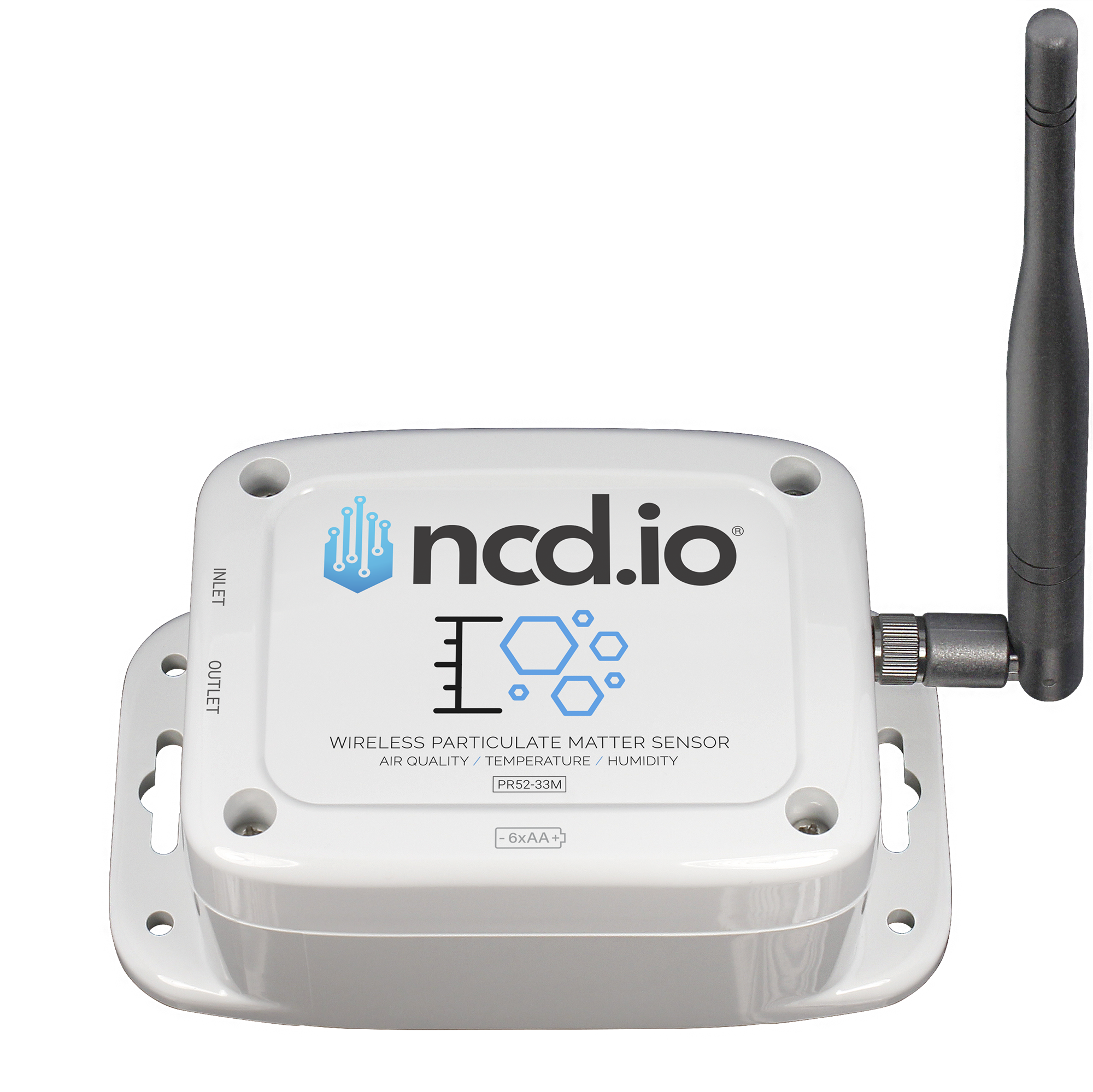
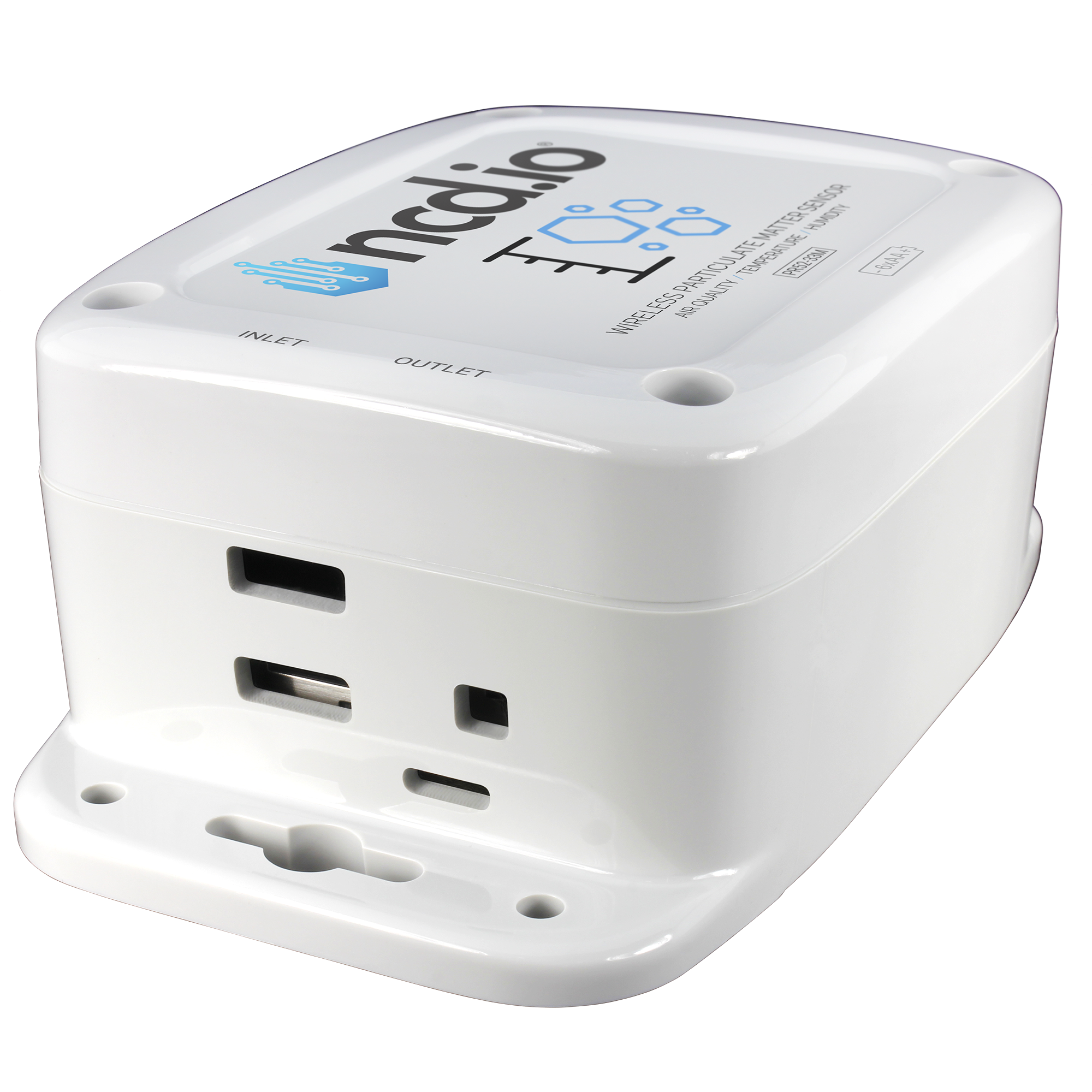
Wall-mount or magnet-mount the sensor wherever you need readings, a plant floor, cleanroom, warehouse, or workshop, with its INLET and OUTLET air path clear. No conduit to run back to a panel.
Six AA batteries and a built-in sleep mode keep swaps rare. An optional external-power version is available for permanent installs.
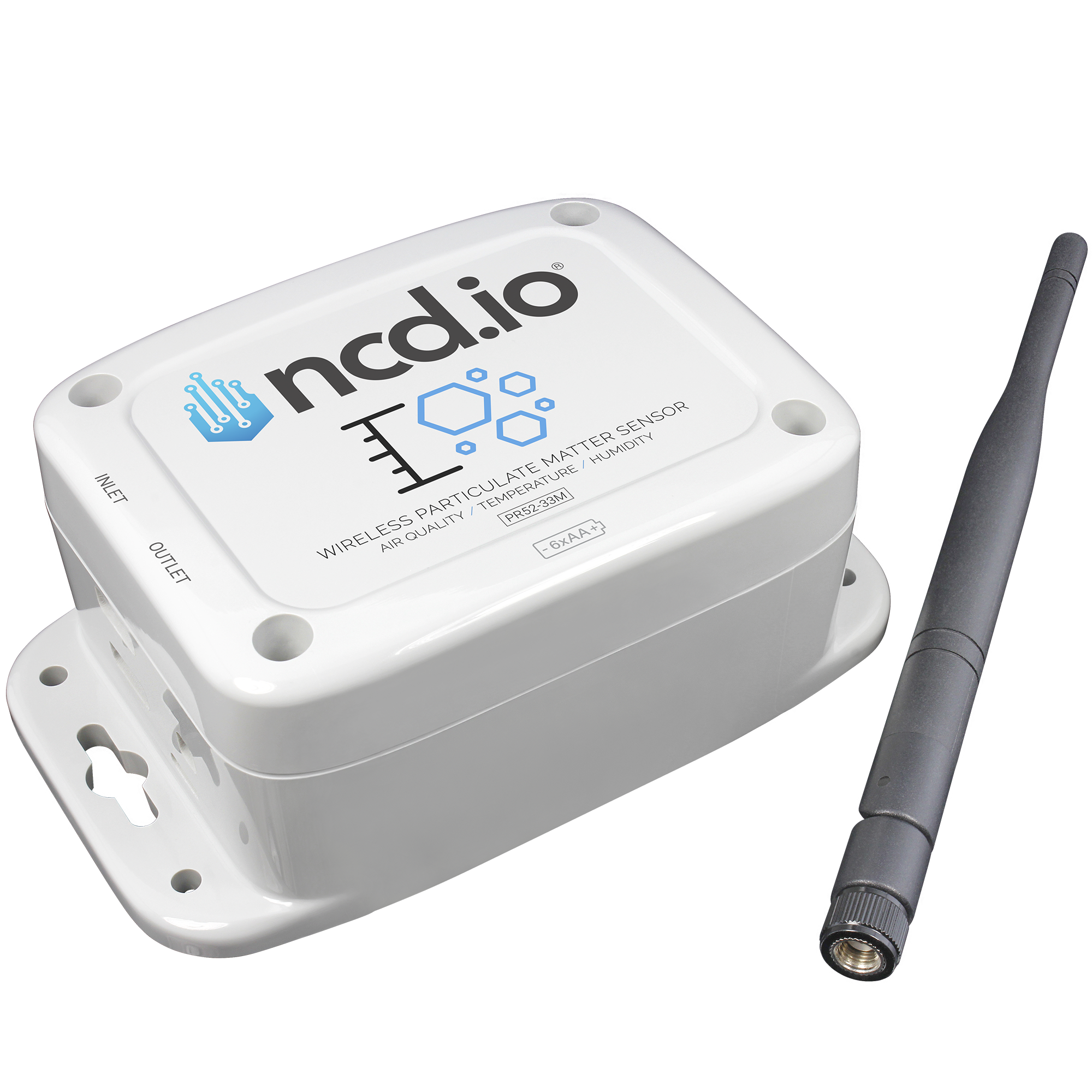
The sensor joins your wireless mesh on its 900 MHz on-board antenna, with no pairing steps and no network configuration to work through.
Particulate mass, particle counts, temperature, and humidity stream to a gateway or Atrium, where you can chart trends and fire alerts the moment the air drifts out of range.
The Atrium Gateway isn’t just a data receiver. It’s a complete industrial IoT platform with dashboards, alerts, reporting, and built-in apps. Point your wireless sensors at it, open your browser, and go, your data stays on your network.
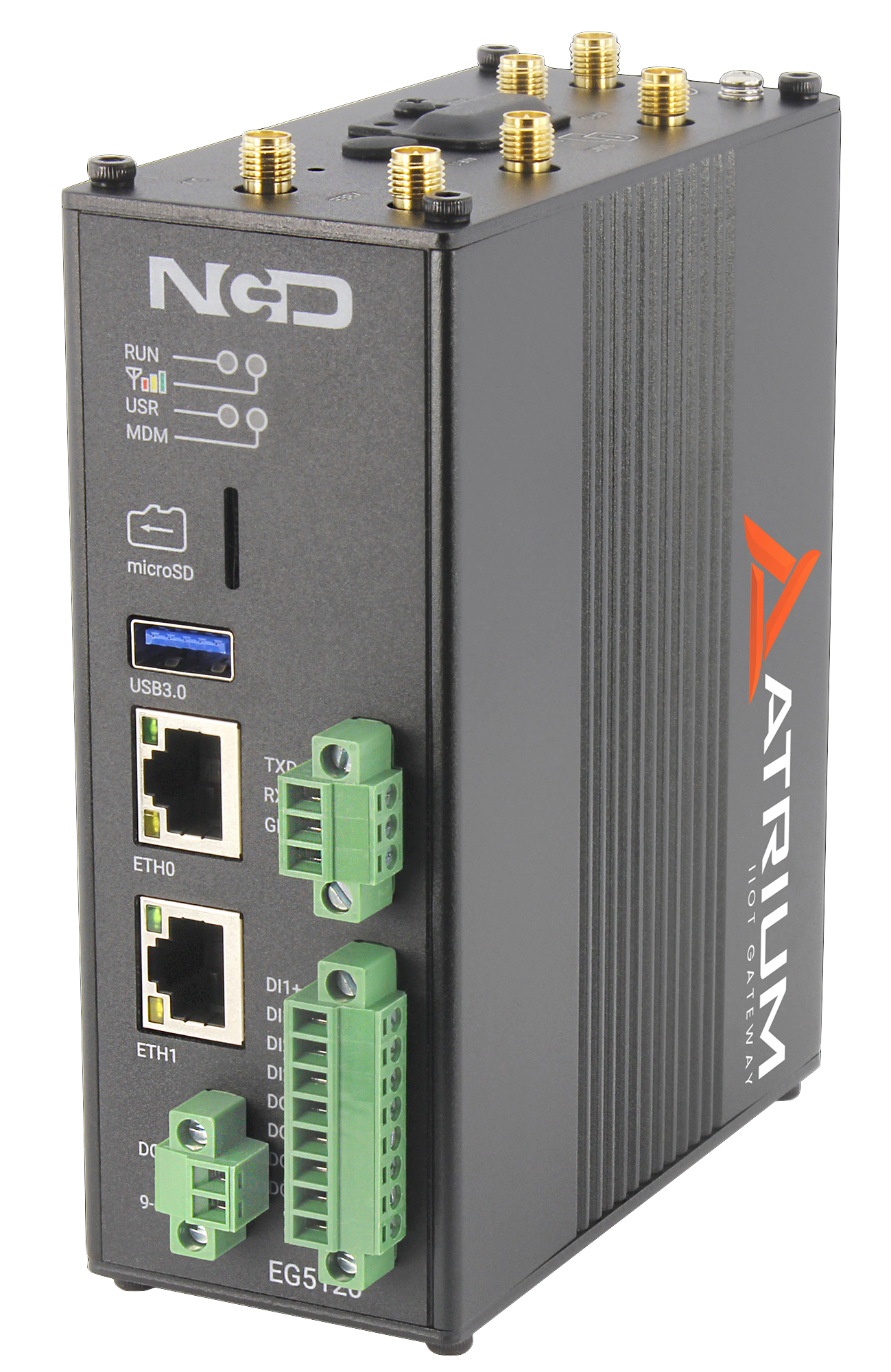
Drag-and-drop widgets let you build custom monitoring views for any audience, facilities teams, lab managers, or operations. Track particulate mass, particle counts, temperature, humidity, battery health, and signal strength at a glance, with auto-refresh and fullscreen mode for wall displays.
Turn a reading into action. When particulates or humidity drift out of range, Atrium can send email notifications, log the event, and actuate relay outputs to switch on a ventilation fan, dust collector, or alarm, all without writing a single line of code.
| Rule | Metric | Condition | Status |
|---|---|---|---|
| High Particulates | PM2.5 | > 35 µg/m³ | TRIGGERED |
| High Coarse Dust | PM10 | > 150 µg/m³ | OK |
| High Humidity | Humidity | > 70 %RH | OK |
| Low Battery | Battery V | < 6.0 V | OK |
Overlay particulate and humidity readings from multiple sensors on a single timeline. Instantly spot which zones are drifting, correlate air quality across locations, and share a live view with your team, no spreadsheets required.
Schedule recurring reports delivered straight to stakeholders’ inboxes. Fleet summaries, zone roll-ups, and alert digests, all generated automatically and emailed on your chosen cadence.
| Name | Type | Format | Schedule | Last Sent | Enabled |
|---|---|---|---|---|---|
| Daily Fleet Summary | Fleet Summary | Daily at 6:00 AM | 07/07/2026 | ON | |
| Particulate Digest | Alert Digest | CSV | Daily at 8:00 AM | 07/07/2026 | ON |
| Cleanroom Zone | Device Group | PDF+CSV | Monday at 8:00 AM | 07/07/2026 | ON |
| Weekly Air Quality Roll-Up | Fleet Summary | Monday at 7:00 AM | 06/30/2026 | ON | |
| Sensor Reading Export | Custom SQL Query | CSV | Daily at 11:55 PM | 07/07/2026 | ON |
The App Center runs on the gateway itself, an app store on your own hardware with no cloud account and nothing to sign into somewhere else. Browse the catalog in your browser, install what the job needs in seconds, and update it in place. Your gateway starts as a lean core and grows only where your operation actually needs it.
Atrium works as a fully self-contained system, but when you need to integrate, Node-RED is built in and ready. Push sensor readings to cloud platforms, databases, SCADA systems, or custom APIs, all configured through a visual flow editor.
Particle mass and number concentration across PM1.0 to PM10.0, plus temperature and humidity, with the wireless reach, battery life, and open integration to monitor the air anywhere on site.
A laser light-scattering sensor measures PM1.0, PM2.5, PM4.0, and PM10.0 mass concentration from 0 to 1000 µg/m³ at 1 µg/m³ resolution, the full particle spectrum in one industrial-grade device.
Reports both particle mass and particle-number concentration (0 to 3000 particles/cm³) down to PM0.5. Four mass fractions and five particle counts is nine readings per transmission, so you see not just how heavy the air is, but how many particles are in it and what size they are.
An automatic fan cleaning cycle runs every 256 transmissions to keep the optics clear, backed by up to 8-year long-term measurement stability for trustworthy readings over the deployment.
A precise temperature and humidity sensor (-25 to +85 °C, 0–100% RH) rides alongside the particulate reading, giving full environmental context in a single transmission.
Reach up to 2 miles line-of-sight on the 900 MHz on-board antenna, with AES-128 encryption on every transmission.
Six AA batteries and a built-in sleep mode stretch the time between swaps, and every transmission reports remaining battery so swaps are planned, not surprises.
Particulate is not one thing. A grain elevator, a welding bay and a machine shop are each fighting a different size of particle, and a sensor that reports a single number cannot tell them apart. This one reports four mass fractions and five particle counts on every transmission.
How much material is in the air. This is the number most exposure limits, customer specifications and internal reports are written against.
How many pieces are in the air, counted down to PM0.5. A count can shift while the mass reading still looks steady.
It clears its own optics. A laser dust sensor has to live in the dust it measures. This one runs an automatic fan cycle every 256 transmissions to clear the optical chamber, which is how it holds up to 8 years of long-term stability instead of drifting as the room does its worst.
| Mass concentration range | 0 to 1000 µg/m³ |
| Mass concentration resolution | 1 µg/m³ |
| Mass concentration precision | ±10% |
| Particle sizes (mass) | PM1.0, PM2.5, PM4.0, PM10.0 |
| Number concentration range | 0 to 3000 particles/cm³ |
| Particle sizes (number) | PM0.5, PM1.0, PM2.5, PM4.0, PM10.0 |
| Sensing method | Laser-based light scattering |
| Self-cleaning | Automatic fan cycle every 256 transmissions |
| Long-term stability | Up to 8 years |
| Temperature range | -25 to +85 °C (-13 to +185 °F) |
| Temperature resolution | 0.025 °C |
| Temperature accuracy | ±0.3 °C |
| Humidity range | 0 to 100% RH |
| Humidity resolution | 0.04% RH |
| Humidity accuracy | ±2% RH |
| Frequency Bands | 868 MHz / 900 MHz / 2.4 GHz |
| Band class | Sub-GHz (868 / 900 MHz) — sub-gigahertz radio travels farther and penetrates walls and equipment far better than higher-frequency Wi-Fi or Bluetooth |
| Protocol | Long-range self-healing wireless mesh |
| Range (on-board antenna) | Up to 2 miles line-of-sight |
| Security | AES-128 encryption |
| Battery | 6 AA batteries |
| Battery life | Set by the reporting interval you choose |
| External power | Optional external-power model (connector + battery backup) |
| Battery reporting | Battery level sent with every transmission |
| Power options | Battery only, or external power connector + battery |
| Operating temperature | -40 to +85 °C (electronics) |
| Dimensions | 3.54 × 4.52 × 2.16 in |
| Mounting | Wall-mount or magnet-mount |
| Origin | Made in USA |
| Compliance | RoHS & CE compliant |
| Certifications | FCC (US), IC (Canada) |
| Battery-powered model | PR52-33M |
| External-power model | PR52-33M_PWR |
Three sensors, one platform. The same long-range mesh, the same battery-powered enclosure, the same Atrium dashboard and alerts, and all three report temperature and relative humidity. The only question is which part of the air you need to see.
Laser particulate measurement, for the rooms where what you manage is dust, smoke, or filtration.
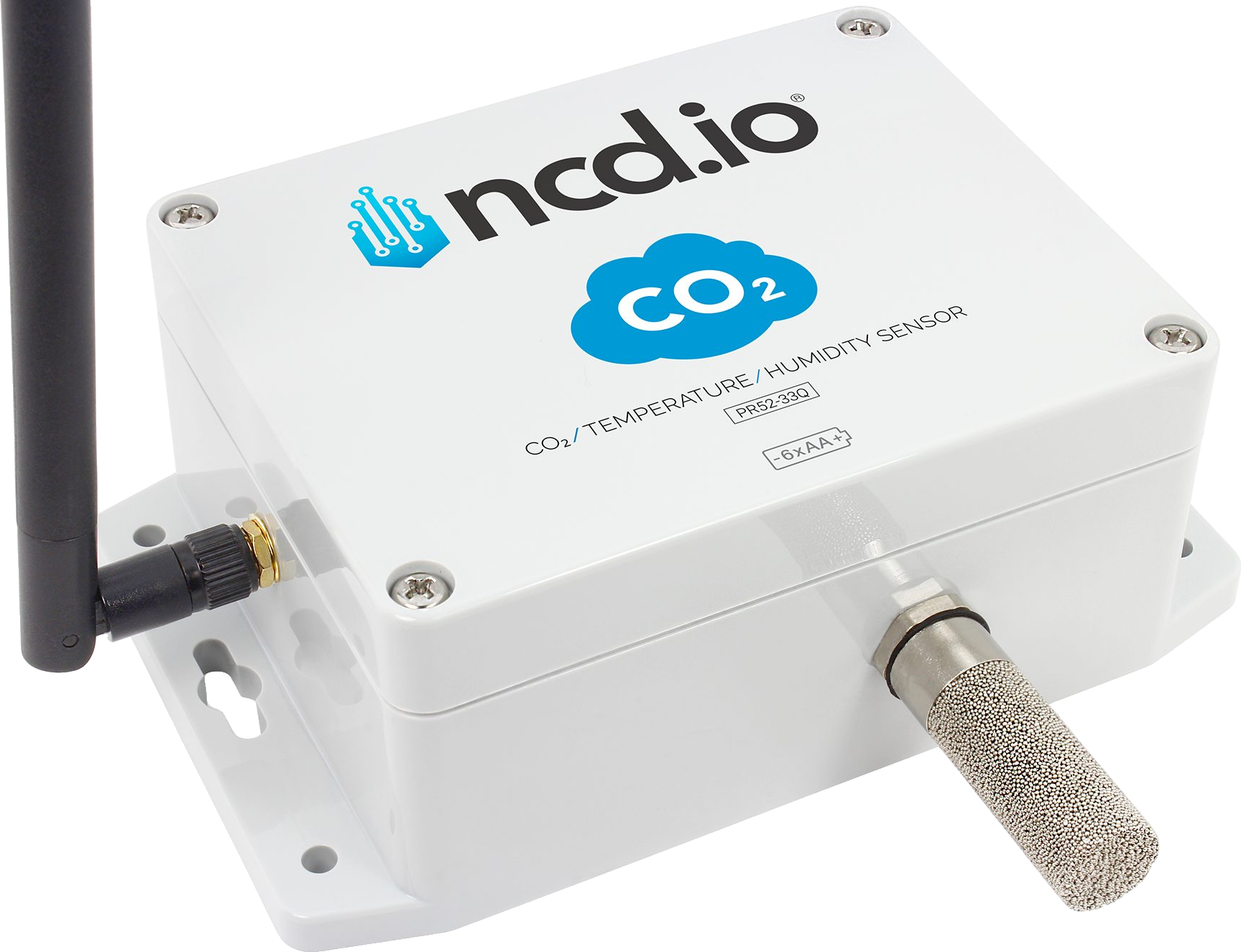
NDIR carbon dioxide, for the rooms where what you manage is ventilation: offices, grow spaces, fermentation, cold storage.
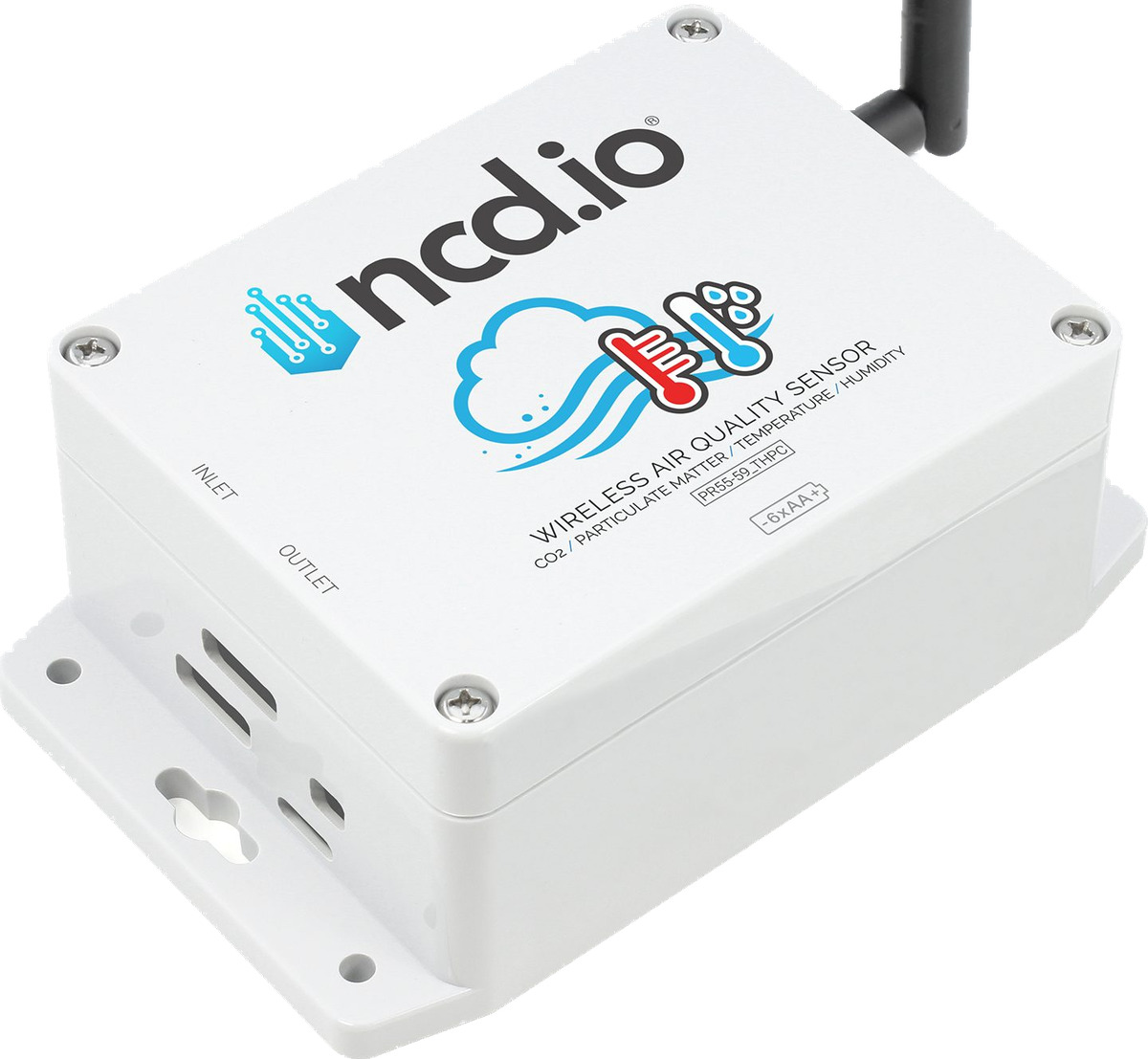
Both measurements from one box, for when a single spot has to answer for the whole room.
The sensor tracks dust and fine particulates, plus temperature and humidity, and transmits the data wirelessly for analysis and action across a wide range of industries and sites.
 Office Building Air Quality
Integrated into an office HVAC system, the sensor watches dust, allergens, and fine particulates in high-traffic corporate spaces, automatically triggering ventilation or air purifiers when levels rise, so the air stays clean and sick days drop.
 Cleanrooms & Healthcare
In cleanrooms, labs, pharmacies, and hospital spaces, the sensor verifies particle counts down to PM0.5 and flags any excursion instantly, protecting sensitive processes and patients, with a logged record ready for audits.
 Manufacturing Emission Tracking
A plant uses the sensor to monitor particulate matter released during production, tracking pollution in real time and alerting managers before levels approach dangerous thresholds, keeping emissions within legal limits and improving environmental compliance.
 Industrial Pollution Control
On the plant floor, where processes throw off harmful particulates, the sensor continuously logs PM levels so facilities stay within regulatory limits, protecting workers and the surrounding environment while documenting health-and-safety compliance.
 Smart City & Urban Pollution Mapping
Deployed on streetlights or rooftops across a city, a mesh of sensors feeds real-time air-quality data to officials, revealing pollution hotspots and trends that drive policy, and warning residents when it’s time to limit outdoor exposure.
 Agricultural Dust Control
During harvest, the sensor watches dust across barns, silos, and fields and can kick on misting systems when airborne particles climb, protecting workers from respiratory hazards while limiting dust drifting toward neighbors.
 Woodworking & Finishing Rooms
Saws, sanders, and finishing booths throw fine dust that hangs in the air long after the machine stops. Monitoring around each area shows whether collection is actually keeping up, and which machine is the one loading the room.
 Mining, Cement & Aggregates
Crushing, bagging, and transfer points are where respirable dust is generated, and they are rarely near anywhere convenient to run cable. Continuous readings at each one make exposure something you can show rather than estimate.
 Warehouse & Material Handling
A large storage building collects dust from traffic, from the product, and from the doors, and the level is never the same in every zone. Several sensors on one mesh cover a whole facility without pulling a single new run.
The math is simple. One purchase versus compounding monthly fees.
Nothing to replace, nothing to ship away. Dust instruments often carry running costs that never appear on the sticker: filters on a service interval, an optical module that goes back to the factory once a year, a pump with a service life. This sensor has no consumables and no scheduled calibration shipping. It clears its own optics with a fan cycle, on site, while it keeps reporting.
The real question is cost per monitored point. Dust is not evenly spread across a building. One instrument at one location tells you about that location. Because these run on batteries over a long-range mesh, the useful comparison is not one sensor against one sensor, it is how many places you can afford to watch at once, and how quickly you can move one when the answer surprises you.
Everything you need to know about the Industrial IoT Wireless Particulate Matter Sensor.
It measures airborne particulate matter, both mass concentration and particle-number concentration, across PM1.0, PM2.5, PM4.0, and PM10.0, plus temperature and humidity for full environmental context. A laser scattering sensor reads the particulates and the device transmits everything wirelessly to a gateway or the Atrium platform.
It uses a laser-based light-scattering sensor to measure mass concentration from 0 to 1000 µg/m³ (resolution 1 µg/m³) across PM1.0, PM2.5, PM4.0, and PM10.0, plus particle-number concentration from 0 to 3000 particles/cm³ down to PM0.5. An automatic internal-fan cleaning cycle runs every 256 transmissions to keep the optics clear for long-term reliability.
Mass concentration (µg/m³) tells you how much particulate weight is in a volume of air, the common air-quality metric for PM2.5 and PM10. Number concentration (particles/cm³) tells you how many individual particles are present, down to PM0.5. Reporting both gives a fuller picture than mass alone, which is useful in cleanrooms and process environments where fine-particle counts matter.
The sensor reports temperature from -25 to +85 °C (±0.3 °C) and relative humidity from 0 to 100% RH (±2% RH). That spans the conditions found in cleanrooms, warehouses, plant floors, workshops, and building interiors.
It can. Any laser light-scattering measurement is affected by very humid air, because particles take on moisture and scatter light as though they were larger. That is worth knowing whenever you compare one reading to another. This sensor reports relative humidity in the same transmission as the particulate numbers, so the conditions behind a reading are always on the record and you can compare like with like rather than guessing. For trend work, compare periods at similar humidity.
No, and it is worth being clear about it. This is an industrial monitoring sensor, not a certified reference instrument. It does not carry regulatory PM approvals, and it is not the right choice where a permit or a legal obligation names a certified fenceline or ambient monitor. It is also built for indoor and sheltered installation rather than open outdoor pole mounting, because the enclosure draws room air through an inlet and outlet and so is not sealed against the weather. What it is built for is knowing what the air is doing across a lot of places at once: which areas are dusty, when they change, and getting an alert while you can still act on it.
Up to 2 miles line-of-sight using its 900 MHz on-board antenna. Sensors can also relay through one another to extend coverage across larger or obstructed sites.
It uses a long-range self-healing wireless mesh, so sensors relay data around obstacles and across distance. Every transmission is protected with AES-128 encryption, and a built-in sleep mode keeps power draw low between readings. The radio supports 868 MHz, 900 MHz, and 2.4 GHz bands.
The Industrial IoT Wireless Particulate Matter Sensor can be wall-mounted or magnet-mounted wherever you need readings, a plant floor, cleanroom, warehouse, workshop, or server room, with its INLET and OUTLET air path kept clear. Because it’s wireless, there’s no conduit to run back to a panel. Keep it indoors or under shelter: the air path through the enclosure means it is not sealed against the weather.
It runs on six AA batteries, helped by a built-in sleep mode, and how long a set lasts depends on how often you have it report. Every transmission also includes the current battery level so you can plan swaps in advance. An external-power version is available for permanent installs.
Yes. The sensor is available in two configurations: a battery-powered model, or an external-power model that adds a power connector alongside battery backup for locations where mains power is available. Both report the same particulate, temperature, and humidity data.
It sends data to PCs, Amazon AWS, Microsoft Azure, and MQTT servers using an open communication protocol. Paired with NCD’s Atrium platform, you also get dashboards, alerts, reporting, and Node-RED integration out of the box, no development team required.
Yes. Paired with NCD’s Atrium platform, an out-of-range particulate or humidity reading can fire email notifications, log the event, and actuate relay outputs, switching on a ventilation fan, dust collector, or alarm, all configured without writing code.
No. It is a one-time purchase, and there are no locked proprietary protocols.
Wherever you choose. There’s no required NCD cloud account, readings stay on your network, and you can forward them to Azure, AWS, a local SCADA system, or your own application.
Yes. The sensor is designed and manufactured in-house by National Control Devices in the USA, and it is RoHS and CE compliant. Many NCD products carry a 5-year warranty, and you’ll always reach a US-based engineer for support, contact NCD with your application details to confirm coverage for your configuration.
Our engineers answer in public on the community forum, and the thread stays up for the next person with the same question.
Ask on the NCD Community ForumOwn the hardware and the data, and monitor airborne particulates, temperature, and humidity across your whole site.
Configure Your System