IoT Long Range Wireless Precision Pressure Sensor Bidirectional Differential
Read the Pressure
Everything Else
Rounds to Zero.
A cleanroom losing its offset, a filter bank starting to load, an exhaust hood that has quietly stopped pulling: all of it shows up first as a few pascals across two ports, long before anyone in the room can feel it. This wireless sensor resolves 0.03 Pa in either direction, on a range measured in inches of water rather than PSI.
No wiring into a panel, no controller to program, no transmitter loop to power.
01
Tee Into Both Sides
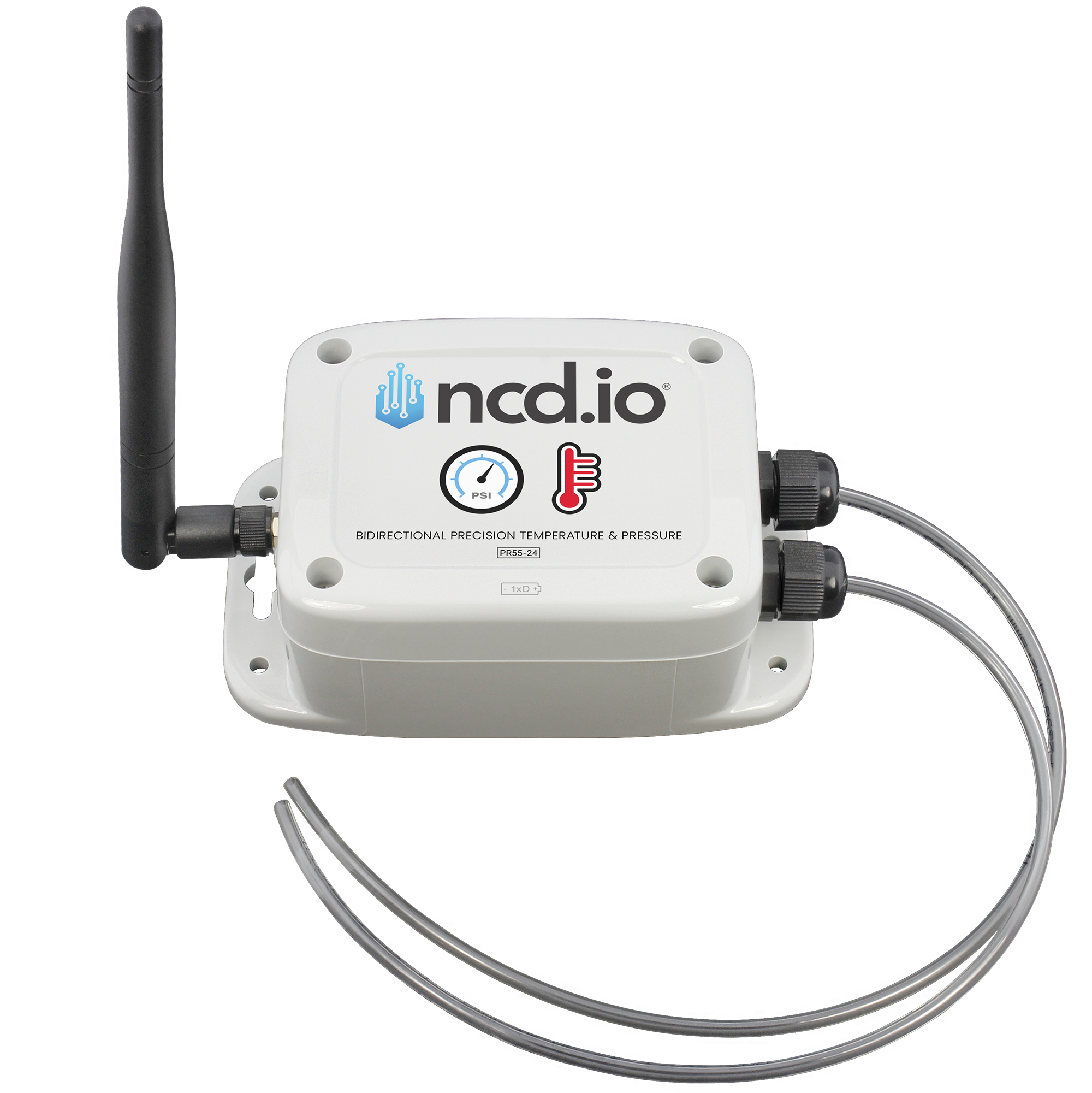
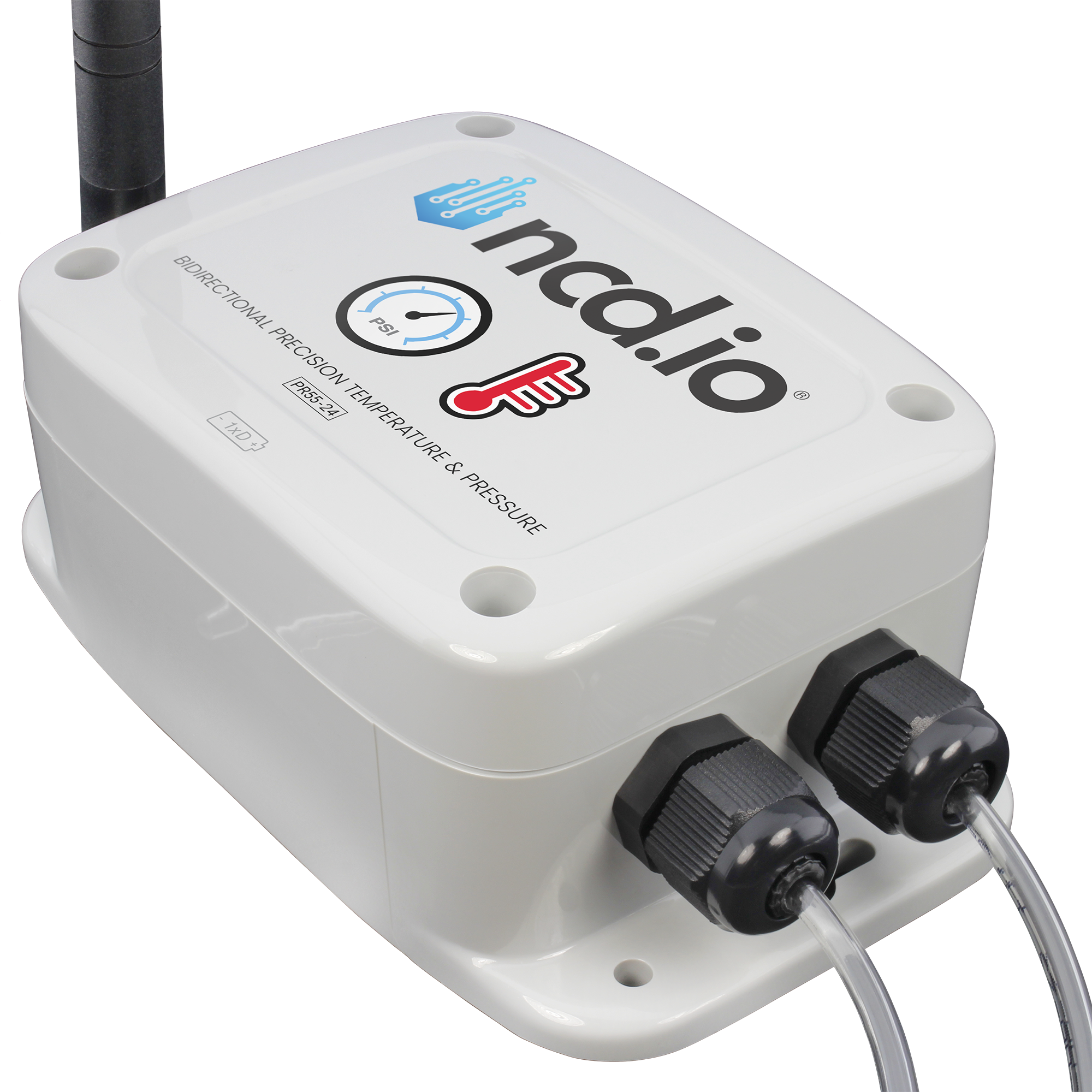
Run tubing from the high side and the low side onto the two barbed nozzles, P1 and P2. The sensor reports the difference between them, positive or negative.
02
Mount & Power
Wall-mount or magnet-mount the enclosure nearby. Run it on the D-cell with Supercap, or use the external-power option for a permanent install.
03
Wireless Mesh
The sensor joins a self-forming, self-healing network, up to 2-mile line-of-sight range with the on-board antenna.
04
Monitor & Act
Browser dashboards, threshold alerts, and CSV export through the Atrium gateway. Set a limit and let it tell you when the cascade slips.
Tubed, powered, and reporting the same afternoon.
Three Wireless Pressure Sensors
Which Pressure Sensor Is the One for Your Job?
NCD builds three wireless pressure sensors, and they differ in exactly one thing: the pressure they are built to read. Pick by the size of the number you expect to see.
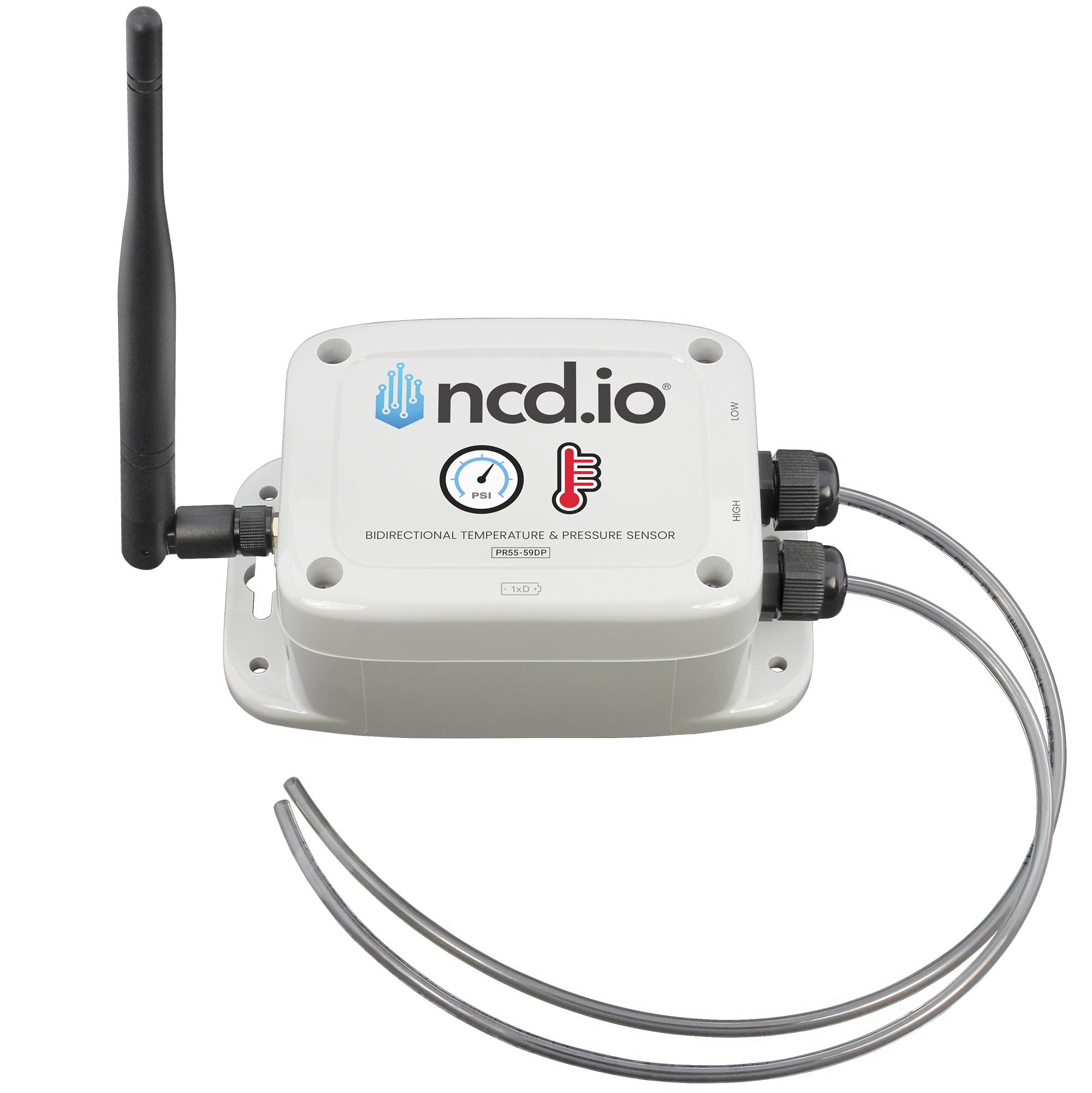
Bidirectional Differential
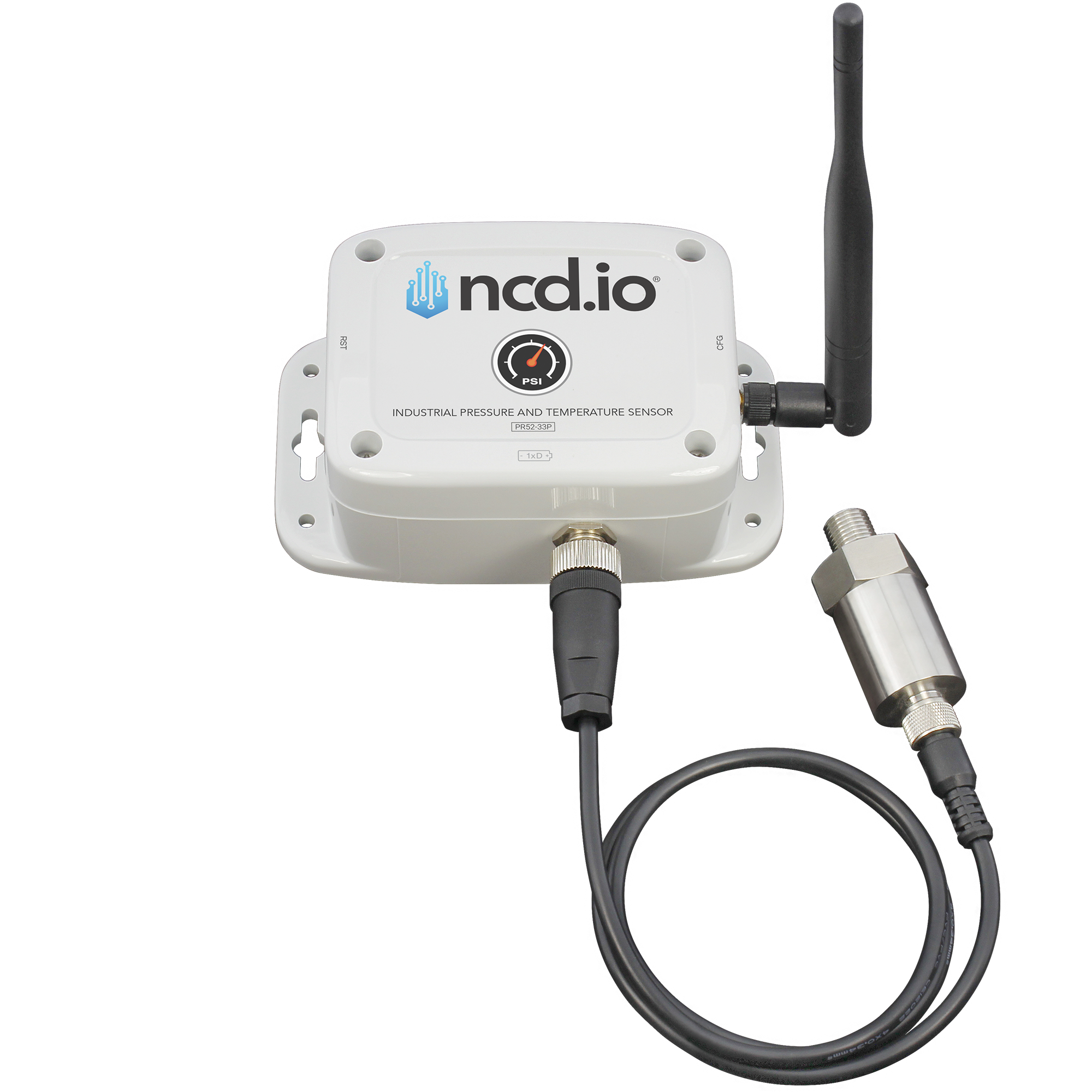
Pressure & Temperature
Precision Differential
What it reads
The difference between two ports, positive or negative
Pressure at a single port, plus temperature
The difference between two ports, positive or negative
Range
±0.15 to ±15 PSI (±4 to ±416 inch H₂O), selectable
0–20 up to 0–10,000 psi, selectable
±500 Pa (±2 inch H₂O / ±5 mbar)
Best for
Duct, blower and process differentials that run into whole PSI
Line, tank and hydraulic pressure, where you need the number itself and not a difference
Room pressurization, filter loading, airflow, anything measured in inches of water
Media
Dry, non-corrosive, non-ionic gases
Liquids and gases compatible with a 316L stainless diaphragm
Air, N₂, O₂, non-condensing and inert gases
Connection
Two ports for the high and low side
1/4 inch NPT thread
Two barbed nozzles for tubing
In common
The same self-healing wireless mesh, the same Atrium gateway, and the same $0 per month on all three
The Atrium Gateway isn’t just a data receiver. It’s a complete industrial IoT platform with dashboards, alerts, reporting, and built-in apps. Point your differential pressure sensors at it, open your browser, and go.
Build Dashboards in Your Browser
Drag-and-drop widgets let you build a pressure view for whoever needs it, facilities, quality, or the maintenance planner deciding which filter bank gets pulled this week. Every dashboard auto-refreshes and supports fullscreen mode for wall-mounted displays.
Threshold dials for differential pressure with your own caution and alarm limits
Line graphs of pressure drop over configurable time ranges, so loading trends are visible
Status cards showing each sensor’s last reading, temperature, and battery
Fullscreen mode for a TV in the facilities office
Custom date/time range selection with quick presets (1H, 6H, 24H, 7D, 30D)
Add, edit, and rearrange widgets without writing code
Widgets, Custom Dashboard
Set Thresholds. Get Notified. Automate Responses.
In Atrium, Triggers are threshold conditions on a single sensor metric, they fire when a value crosses the line. Actions link one or more triggers to responses like email or relay control, and run when every trigger is met. You build both in the browser, no code required.
Triggers fire when a value crosses the threshold, with a separate Reset At point to stop flapping
Per-sensor conditions on differential pressure, temperature, and low battery
Catch a room going the wrong way with a Below trigger, and a loaded filter with an Above trigger
Actions run when all their triggers are met, email on trigger, on clear, or both
Live status: OK / TRIGGERED for triggers, OK / ACTIVE for actions
Reuse triggers and actions across your whole fleet
Alerts & Automations
Triggers
Name
Sensor
Cond.
Thresh.
Current
Status
Filter Loaded
AHU-1 Filter Bank
Above
400 Pa
355 Pa
OK
Cleanroom Cascade Lost
Cleanroom 2
Below
12 Pa
6 Pa
TRIGGERED
Hood Not Pulling
Fume Hood 04
Below
25 Pa
41 Pa
OK
Low Battery
Cleanroom 2
Below
20 %
91 %
OK
Actions
Name
Triggers
Action
Status
Cascade Alert
Cleanroom Cascade Lost(Cleanroom 2)MET
Email(trigger+clear) quality@acmelabs.com
ACTIVE
Filter Change Notice
Filter Loaded(AHU-1 Filter Bank)
Email(on trigger) facilities@site.com
OK
Low Battery Notice
Low Battery(Cleanroom 2)
Email(trigger+clear) maintenance@site.com
OK
Automated Email Reports
Schedule recurring reports delivered straight to stakeholders’ inboxes, pressure logs for the quality file, filter-loading summaries for the planner, and per-zone roll-ups, all generated automatically on the cadence you choose.
Alert Digest, every pressure trigger and clear, summarized for the day
Fleet Summary, status of every differential pressure sensor at a glance
Sensor Group reports, focused on one area (cleanroom suite, air handler)
Delivered as CSV, PDF, or PDF+CSV on a daily, weekly, or custom schedule
Toggle each report on or off, or hit Send Now for an on-demand copy
Custom SQL Query reports for fully bespoke pressure-history exports
Scheduled Reports
Reports
Name
Type
Format
Schedule
Last Sent
Enabled
Pressure Alert Digest
Alert Digest
CSV
Daily at 7:00 AM
08/18/2026
ON
Weekly Fleet Summary
Fleet Summary
PDF
Monday at 8:00 AM
08/17/2026
ON
Cleanroom Suite Group
Sensor Group
PDF+CSV
Friday at 6:00 AM
08/15/2026
ON
Filter Loading Export
Custom SQL Query
CSV
Monday at 8:00 AM
08/17/2026
ON
Hood Face Pressure Log
Sensor Group
PDF
Daily at 6:00 AM
08/18/2026
ON
The App Center for Your Gateway
The App Center runs on the gateway itself, an app store on your own hardware with no cloud account and nothing to sign into somewhere else. Browse the catalog in your browser, install what the job needs in seconds, and update it in place. Your gateway starts as a lean core and grows only where your operation actually needs it.
Every app runs on the gateway, right alongside the data it reads
Add an app when a job calls for it, and skip the ones you will never open
Apps install and update in place, from the same screen
Packages are signed and integrity checked before anything installs
Atrium Apps
App Center
Close
AC
Action
Automate relay control with sensor-triggered recipes and interactive board management.
v1.0.0
EN
Energy Monitor
Monitor energy consumption and identify optimization opportunities.
v1.0.0
EV
Environmental
Monitor temperature, humidity, air quality, and compliance across facility zones.
v1.0.0
AP
AssetPulse
Machine Health
Predictive maintenance for rotating equipment: set up assets, monitor vibration, and get plain-language health insights.
v1.2.0Premium
OE
OEE
Overall Equipment Effectiveness tracking and analysis.
v1.0.0
PM
Productivity Monitor
Track machine runtime against shift quotas with real-time gauges.
v1.0.0
Add only the apps your operation needs — right on your gateway.
Connect to Anything, Or Nothing
Atrium works as a fully self-contained system, but when you need to integrate, Node-RED is built in and ready. Push data to cloud platforms, databases, SCADA systems, or custom APIs, all configured through a visual flow editor.
Node-RED pre-installed with sensor data nodes ready to use
Push to AWS, Azure IoT Hub, or any MQTT broker
REST API for custom integrations and data export
SQLite database with direct query access
Modbus TCP/RTU support for PLC and SCADA integration
VPN and Cloudflare Tunnel support for secure remote access
Built to Measure the Pressures Nobody Else Can See
What this sensor does that a general-purpose pressure transducer cannot.
One Range, Every Unit
The Same Full Scale, Written the Way Your Spec Writes It
±500 Pa
Pascals
±2 inH₂O
Inches of Water
±5 mbar
Millibar
±0.07 PSI
Pounds / In²
Resolution reaches 0.03 Pa, and the sensor still detects below 0.02 Pa, less than one ten-thousandth of an inch of water column. Cleanroom, duct and draft pressures are written in these units because the differences that decide the outcome really are this small.
Sees It While It’s Still Small
The changes that matter arrive small and early: a room offset slipping by a pascal or two, a filter bank loading a little more each week. This sensor separates those from noise instead of averaging them away, so a trend is visible while it is still only a trend.
Precision Class
Reads Both Directions
Two ports and a signed reading between them across a full scale of ±500 Pa. A room that swings from positive to negative needs no second sensor and no re-plumb, the number simply changes sign.
Bidirectional
No Offset Drift to Chase
The sensing element is a medical-grade digital differential sensor from the Sensirion SDP800 family, specified with no offset drift. Low-range instruments are notorious for wandering off between calibrations, and a zero you cannot trust makes every small reading meaningless.
Holds Its Zero
Temperature in the Same Packet
An integrated temperature sensor reports alongside every pressure reading, so a shift in differential can be read against the air temperature that may have caused it. One device, two measurements, one battery.
Two Miles of Self-Healing Mesh
Up to 2 miles line-of-sight on the on-board antenna, with 128-bit AES encryption and an open communication protocol. Sensors relay for each other, so a mechanical room across the campus still reports in.
OTA / FOTA Firmware Updates
Update firmware over the air across the fleet. No ladders, no ceiling tiles, no pulling sensors out of a cleanroom to plug them into a laptop.
Technical Specifications
Full Spec Sheet
0.03 Pa
Resolution
2 ports
Differential
+ Temp
Integrated Sensor
2 mi
Wireless Range
D-cell + supercap
Battery
Show full specificationsHide full specifications
Pressure Measurement
Measurement Type
Bidirectional differential, positive and negative pressure across two ports
Pressure Range
Up to ±500 Pa (±2 inch H₂O / ±5 mbar)
Pressure Resolution
Up to 0.03 Pa
Lowest Detectable Pressure
Less than 0.02 Pa
Offset Drift
No offset drift
Sensing Element
Sensirion SDP8xx-series digital differential pressure sensor (medical grade)
Pressure Ports
Two ports, P1 and P2, with two barbed nozzles included
Compatible Media
Air, N₂, O₂, non-condensing and inert gases (non-aggressive gases only)
Temperature Measurement
On-Board Temperature
Integrated temperature sensor, reported alongside pressure
Temperature Resolution
2 °C
Operating Temperature Range
-20 °C to +85 °C (-4 °F to +185 °F)
Wireless & Network
Protocol
Long-range self-healing wireless mesh
Frequency Bands
868 MHz / 900 MHz / 2.4 GHz
Band class
Sub-GHz (868 / 900 MHz), sub-gigahertz radio travels farther and penetrates walls and equipment far better than higher-frequency Wi-Fi or Bluetooth
Range (line of sight)
Up to 2 miles (900 MHz on-board antenna)
Encryption
128-bit AES
Integration
Open communication protocol (no proprietary lock-in), AWS, Azure, MQTT, Node-RED, or any modern interface
Power & Battery
Battery
D-cell with Supercap
Battery Life
Up to 5 years (interval & environment dependent)
Transmission Lifetime
500,000 wireless transmissions
Power Options
Battery, or optional external power
Transmission Interval
User-defined, the sensor reports on the schedule you set
Firmware
Over-the-air (OTA / FOTA) updates across the mesh
Build & Identification
Mounting
Wall-mount or magnet-mount
Antenna
On-board antenna
Part Number
PR55-24
Compliance
RoHS
Where a Few Pascals Matter
Anywhere Air Is Supposed to Move One Way and Only One Way
Differential pressure is how a building tells you whether air is still going where you designed it to go. These are the places a few pascals decide the outcome.
Cleanroom & Room Pressurization
Cleanrooms, isolation rooms, and compounding suites hold a small positive or negative offset against the corridor. Lose the cascade and containment is gone while the room still looks perfectly normal.
< 0.02 Palowest detectable pressure
Filter Banks & Baghouse Loading
Pressure drop across a filter climbs steadily as it loads. Watching that rise turns filter changes from a date on a calendar into a decision the equipment makes for you.
±500 Pafull scale, both directions
Fume Hoods & Containment
A hood that has stopped pulling looks identical to one that is working. Face-velocity problems register as a differential long before anyone downstream notices a smell.
0.03 Paresolution (up to)
Air Flow & Duct Velocity
Across an orifice plate, a pitot tube, or a flow station, velocity is a differential pressure measurement. Read it wirelessly instead of walking the duct run with a manometer.
2 miwireless range (up to)
Heat Recovery & VAV Control
Energy recovery wheels, plate exchangers, and variable-air-volume boxes all depend on a pressure relationship holding. Trend it and you can see a box drifting out of control authority.
No offset driftno periodic re-zeroing
Gas Boilers, Stoves & Fuel Cells
Combustion air and flue draft live in inches of water. A small change in draft changes the burn, and it shows up on a differential reading before it shows up in efficiency numbers.
Air, N₂, O₂and inert gases
Isolation Rooms & Operating Theatres
An isolation room has to stay on the correct side of the corridor, and an operating theatre on the other. Both are held by a handful of pascals, and a door left propped or a filter loading up can undo either one without anything looking wrong from the hallway.
Medical gradedigital sensing element
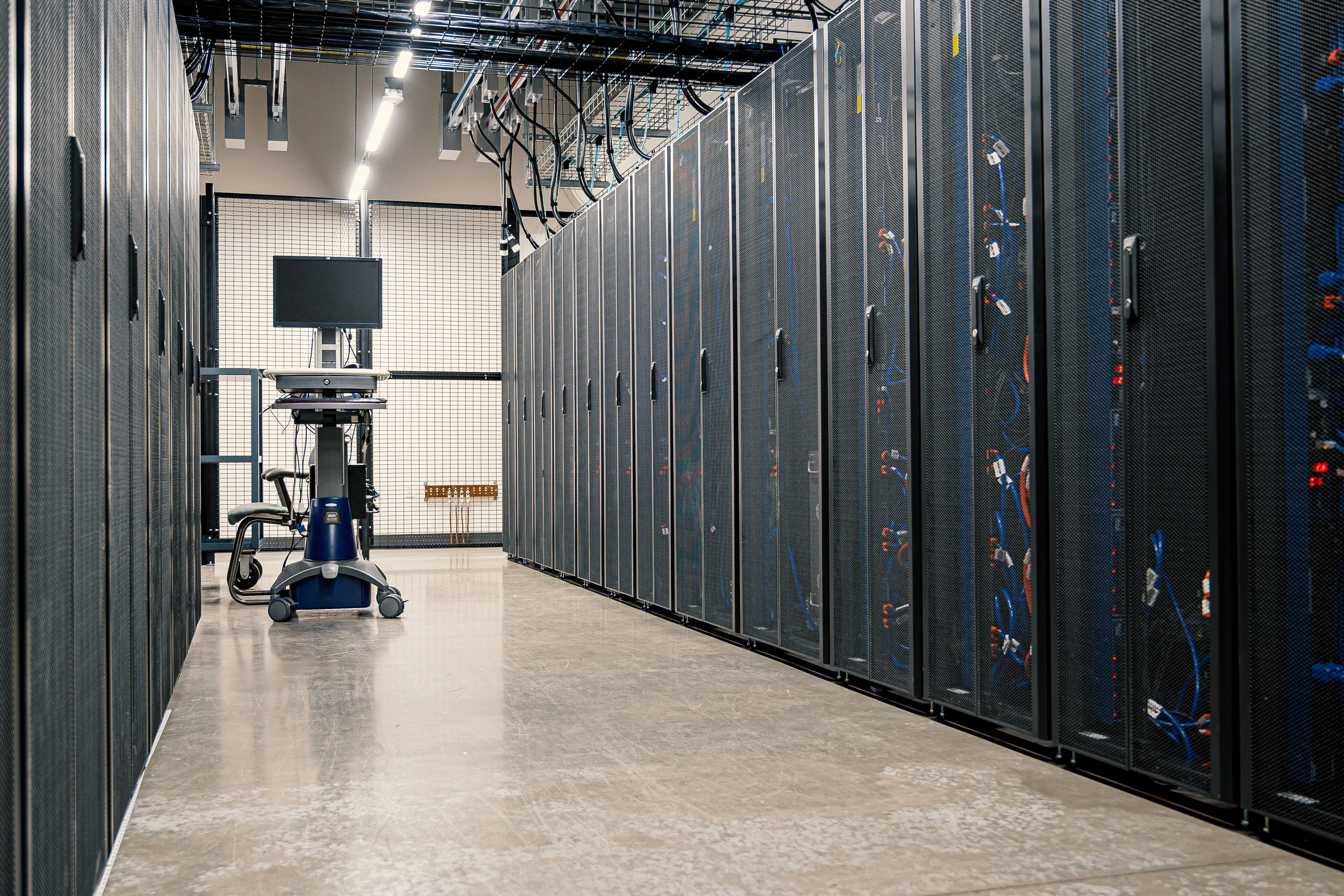
Data Center Containment Aisles
Cold aisle to hot aisle is a small offset in either direction, and which direction it goes tells you whether you are bypassing air or recirculating it. Restricted airflow through a loading CRAC filter turns into a hot spot before it turns into an alarm.
Bidirectionalpositive and negative
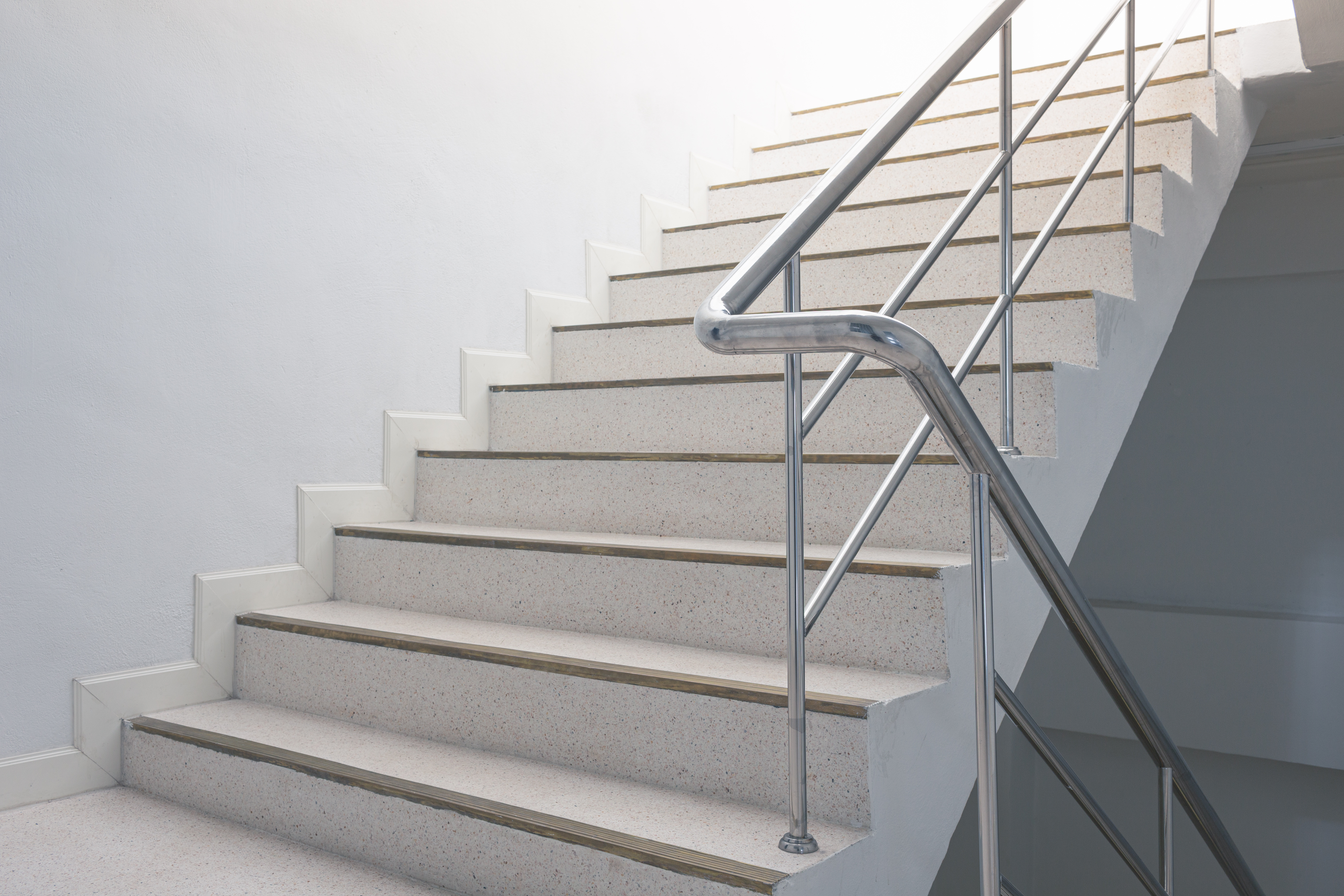
Stairwell & Atrium Pressurization
Stairwell pressurization is a life-safety system that is tested once a year and trusted the rest of the time. Reading the differential continuously means a fan or damper that has quietly stopped holding the offset is found in the same week, not at the next inspection.
Two portsP1 and P2, nozzles included
The Cost of a Few Pascals
A Room Stops Holding Containment Long Before Anyone Feels a Draft.
Containment fails silentlyA cleanroom, isolation room, or fume hood that has dropped out of its pressure offset looks and sounds exactly like one that is holding. Nothing announces it until a batch record or an exposure report does.
Filters get changed on the wrong daySwap on a calendar and you either throw out media with life left in it, or run a loaded bank that starves airflow and makes the fan work harder than it was ever meant to.
No log means no proofWhen an auditor asks whether the pressure cascade held overnight, a clipboard signed at nine in the morning is not an answer. Without a continuous record there is nothing to show.
Total Cost of Ownership
Own vs. Rent, 3 Years, 10 Sensors
The math is simple. One purchase versus compounding monthly fees.
Complete configuration, networking, and operation reference for the wireless precision bidirectional differential pressure sensor.
Read the guide
Frequently Asked Questions
Answers to the most common questions about wireless precision differential pressure sensing.
Measurement & Range
It is a battery-powered industrial wireless sensor from NCD that measures the pressure difference between two ports, in both directions, down to a resolution of 0.03 Pa. It covers a full scale of ±500 Pa (±2 inch H₂O / ±5 mbar), reports temperature alongside every pressure reading, and reports over a long-range self-healing wireless mesh.
Differential means the sensor reports the difference between two pressures rather than either one on its own, and bidirectional means that difference can be read as positive or negative. Connect the two ports across a filter, a wall, or a flow element, and the sensor tells you which side is higher and by how much, so a room that flips from positive to negative pressure is caught without changing anything about the installation.
Pressure resolution reaches 0.03 Pa and the lowest detectable pressure is below 0.02 Pa. That is the point of the precision sensor: general-purpose industrial pressure sensors work in PSI, and everything happening inside a cleanroom or a duct at these levels would read as zero on one of them.
The sensor’s full scale of ±500 Pa is the same as ±2 inch H₂O and ±5 mbar. HVAC and cleanroom specifications are usually written in inches of water, so a room offset called out as 0.05 inch H₂O is about 12 Pa, comfortably inside this sensor’s range and hundreds of times larger than its resolution.
No. The sensing element is a medical-grade digital differential pressure sensor from the Sensirion SDP800 family, specified with no offset drift. Holding zero is the hard part at these pressures, and it is the reason this element was chosen over a general-purpose transducer.
Installation & Media
Both ports are for air, nitrogen, oxygen, and other non-condensing, inert, non-aggressive gases. It is not built for liquids, steam, condensing service, or corrosive gases. If your application involves a liquid or a higher-pressure line, the wireless pressure and temperature sensor with its stainless diaphragm is the right sensor instead.
The sensor ships with two barbed nozzles, one for each port. Run tubing from the high-pressure side onto P1 and the low-pressure side onto P2, then wall-mount or magnet-mount the enclosure nearby. There is no controller to program and no loop to power, so a typical installation is tubing, a battery, and a place on the wall.
Yes. An integrated temperature sensor reports alongside every pressure reading, at a resolution of 2 °C over an operating range of -20 °C to +85 °C. Both values arrive in the same transmission, so pressure history and air temperature can be read against each other in the same dashboard.
Range, Power & Ownership
Up to 2 miles line-of-sight with its on-board 900 MHz antenna. Because the sensors form a self-healing wireless mesh, they relay for each other, so one Atrium gateway can collect readings from a mechanical penthouse, a basement, and a building across the lot. Transmissions are protected with 128-bit AES encryption.
The sensor runs on a D-cell with Supercap and delivers up to 5 years of battery life, with an operational lifetime of 500,000 wireless transmissions. Actual life depends on the transmission interval you set and on environmental conditions. An external power option is available for permanent installations.
There are no monthly fees and no recurring software costs. Readings flow through the Atrium gateway, which supports AWS, Azure, MQTT, Modbus, Node-RED, and a REST API, and the sensor’s open communication protocol means no proprietary lock-in. Pressure data can be pushed into an existing building management, SCADA, or notification platform, or kept entirely on your own network.
The IoT Long Range Wireless Precision Pressure Sensor Bidirectional Differential is made in the USA and is RoHS compliant. It is built and supported by NCD, a manufacturer trusted by more than 7,000 customers worldwide for industrial wireless sensing.
Still have a question?
Our engineers answer in public on the community forum, and the thread stays up for the next person with the same question.

 Made in the USA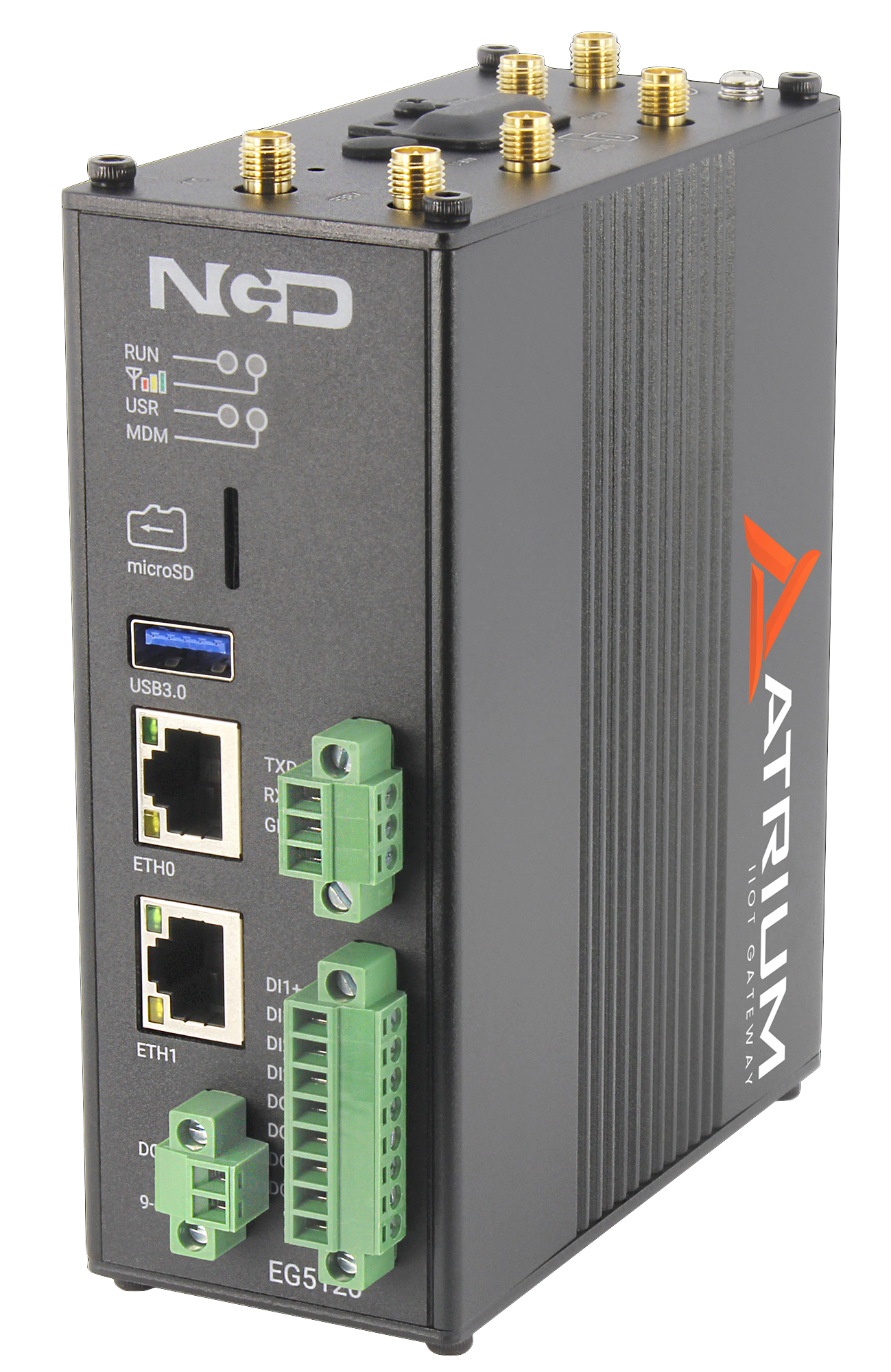
 Cleanroom & Room Pressurization
 Filter Banks & Baghouse Loading
 Fume Hoods & Containment
 Air Flow & Duct Velocity
 Heat Recovery & VAV Control
 Gas Boilers, Stoves & Fuel Cells
 Isolation Rooms & Operating Theatres
 Data Center Containment Aisles
 Stairwell & Atrium Pressurization
 Bidirectional Differential →
 Pressure & Temperature →